-
Reflecting back, looking forward . . .
Dateline: 29 December, 2022
What a long, strange year it has been.
So much has happened to me just in the the last three months alone that I don’t even know where to begin. I had a wonderful summer in Prague. I completed my certification in teaching English as a foreign language. I started my new career as an English foreign language teacher. I met some very interesting people. And I fell in love with a beautiful Bohemian woman.
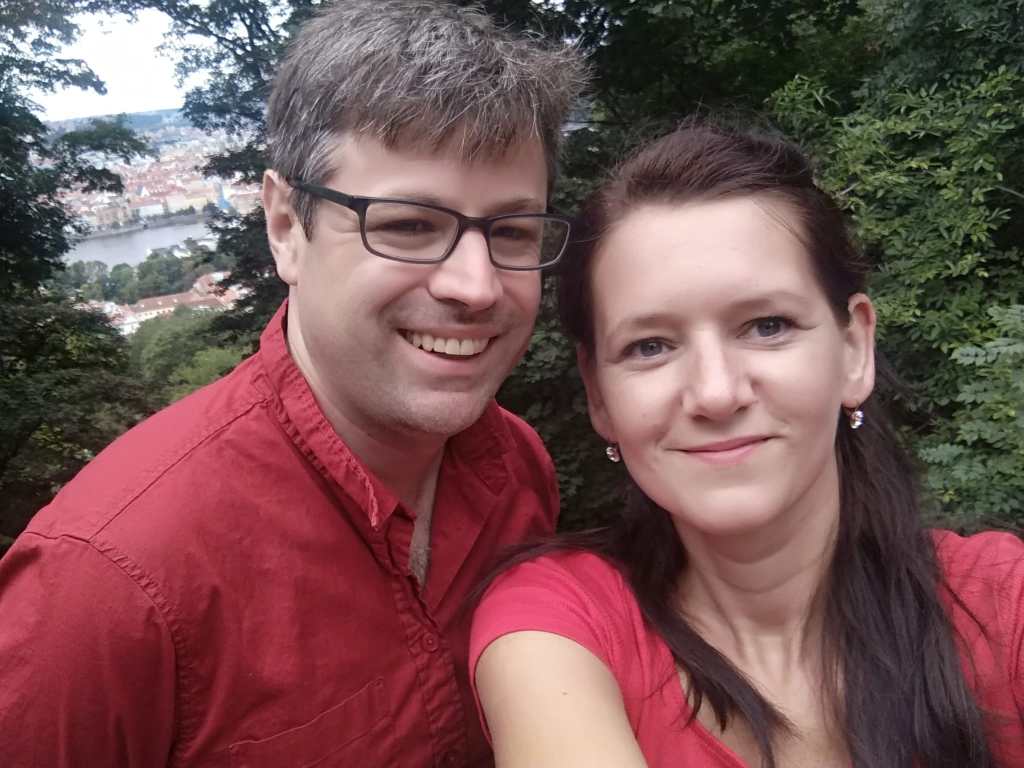
Love is all around me . . . and so the feeling grows 😉 In our era of instant gratification, people ask my why I don’t publish here more often. I humbly remind them then when it comes to writing, I like to put quality first, and if that means I must write less often, then so be it. However, even though I haven’t been publishing, I have been writing. Rather than publish a few half thoughts and photos on the various (anti) social media platforms, I wrote my thoughts with ink on paper, mere drafts to be published at a later date.
It was during this drafting process that one of my students asked if I, an American and therefore an obvious fan of baseball, was aware that that the Czech national baseball team had defeated Spain and thus, qualified for the 2023 World Baseball Classic. I told my student I wasn’t even away that the the Czech Republic even had a national baseball team.
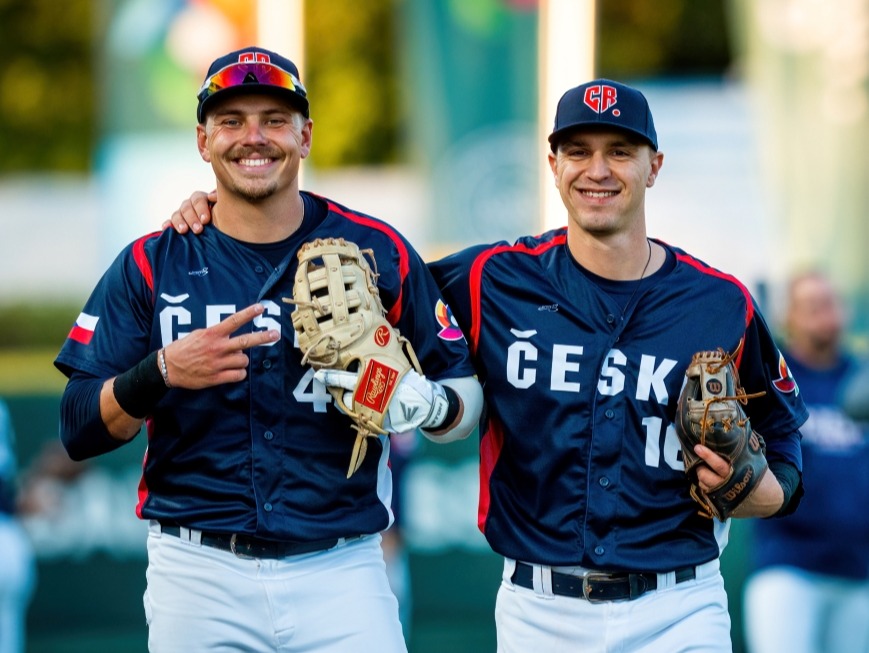
Czech baseball players are all smiles after defeating Spain and earning a spot on the 2023 World Baseball Classic Tournament. “Oh, we do,” my student replied. “It’s a baseball team like no other. The pitcher is a fireman; one of our other players is a doctor.”
When I heard that, my thoughts immediately raced back what many refer to as baseball’s Golden Age. Before free agency. Before television. Before multi-million dollar player contracts. I thought of Dominic DiMaggio’s memoir, Real Grass, Real Heroes. Dominic, younger brother of the much more famous Yankee slugger Joe, also played major baseball, but for the arch-rival Boston Red Sox. Dominic’s memoir focuses almost exclusively on the summer of 1941. When that was summer over, baseball nearly ended with it, as nearly all the most famous players of the era–as well as all military-aged young men who would have played in the minor leagues to grow and develop into better players–enlisted or were drafted into World War II.
Bob Feller was the first to enlist–a mere 48 hours after the Japanese bombed Pearl Harbor, Feller enlisted in the United States Navy. At the time, he had been averaging 25 wins per season and over 250 strikeouts per season. For three years, Feller served in the United States Navy, seeing combat and serving in both the Pacific and North Atlantic. His career numbers, impressive as they were, would have been all the more spectacular if not for his military service. Fans would ask Feller how he felt about sacrificing so much of his career to World War II, and Feller would invariable respond: Defeating the Germans and the Japanese was the Greatest Victory.
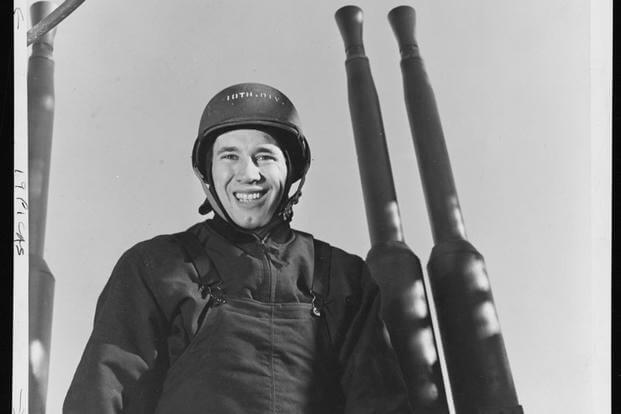
They called him “Bullet Bob” for his blazing fastball, but Feller’s fight against the forces of fascism during World War II gave his nickname new meaning. And yet after this Greatest Victory, when players returned to the field on opening day in 1946, baseball, and the world, would never be the same again. Dominic writes about these changes in his memoir, how some are easy to identify, but others, hard to describe in words, just a general feeling of difference. Baseball would change much more in the years to come–astroturf being the chief atrocity among them–but Dominic doesn’t let his opinion to which changes are good are bad, and simply lets you, the reader, decide for yourself. For example, only the most blatant racists would ever take issue with Jackie Robinson, a man who broke baseball’s color barrier before the 1964 Civil Rights Act, before Rosa Parks and the Montgomery Bus Boycott, and before Harry Truman desegregated the U.S. military.
One jaw-dropping difference is that of player salaries. According to Dominic, his brother Joe was one of the only ballplayers who could afford private transportation to spring training in Florida. Others had to carpool, and in the era before the Interstate Highway System, this was a long, grueling trip. If you got stock behind a truck moving slowly uphill–to bad. You and your teammates had to wait until after the crest of the hill to pass the truck. You and your teammates also had to take turns driving. Another point of contention was whether or a ballplayer had to work a second job during the offseason. While the top players of the era earned enough money to rest and recover during the winter months, other players had to work second jobs to make ends meet. Obviously, these players were less than enthused about driving from end of the country to another at the start of spring training. One can only wonder what those conversations as to “it’s your turn to drive!” would have sounded like in the time before American athletes were multi-millionaires.
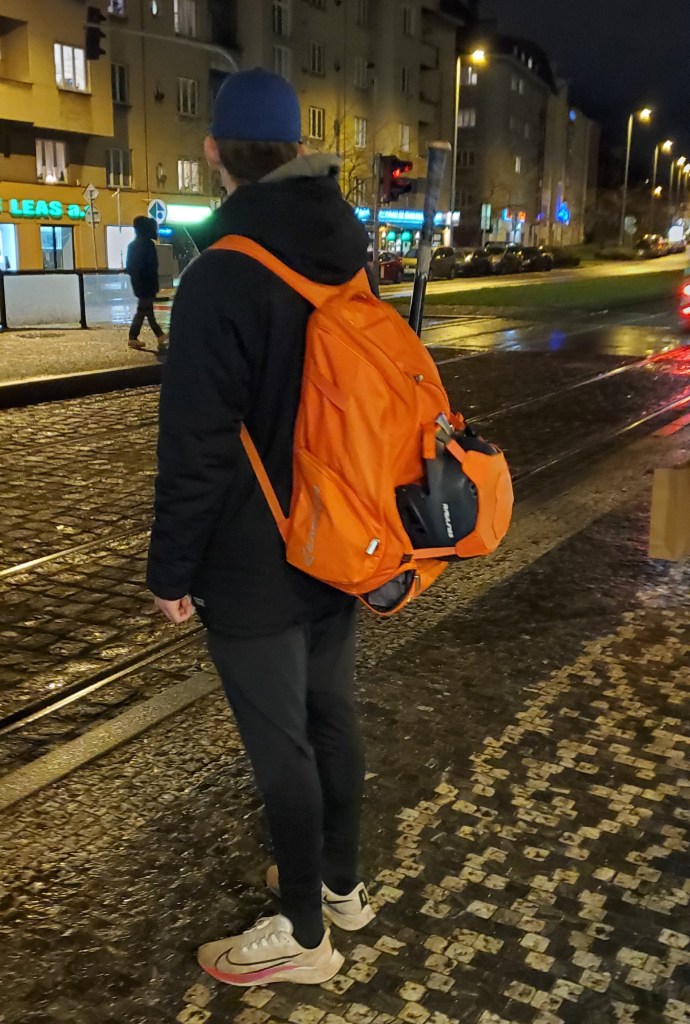
A sign of things to come? A Czech ballplayer waits for the tram at Hradčanská And yet here in Prague, that time is now. Baseball, America’s national pastime, is catching on in the Czech Republic. Granted, the Czech’s I speak to are either unaware of their own baseball team, or very cynical about their team’s chances–one Czech baseball player even told me: “I think we are going to get our asses kicked!” Given that their best player is a catcher who never played higher than AAA and is currently studying for his Master’s in Business Administration, it’s a hard point to argue with. And yet my response each time is the same. Dismal as the Czech national baseball team’s chances may be, the way they play is simply inspiring. With grit, determination, hustle. Heart. No matter what the statheads say, that is the winning formula for any championship team. And I warmly invite anyone who doubts me to simply look up which team defeated the 2002 “Moneyball” Oakland A’s.
So yes, I have much to write about. And I will continue writing about my experiences this summer, this fall, and during my first Christmas in Europe. I will continue to hope and state publicly for peace in eastern Europe and elsewhere. I don’t know what the future will bring, but I will continue to humbly hope that in the some way, I can contribute towards the greater good of mankind simply by documenting my experience in heart of Europe.
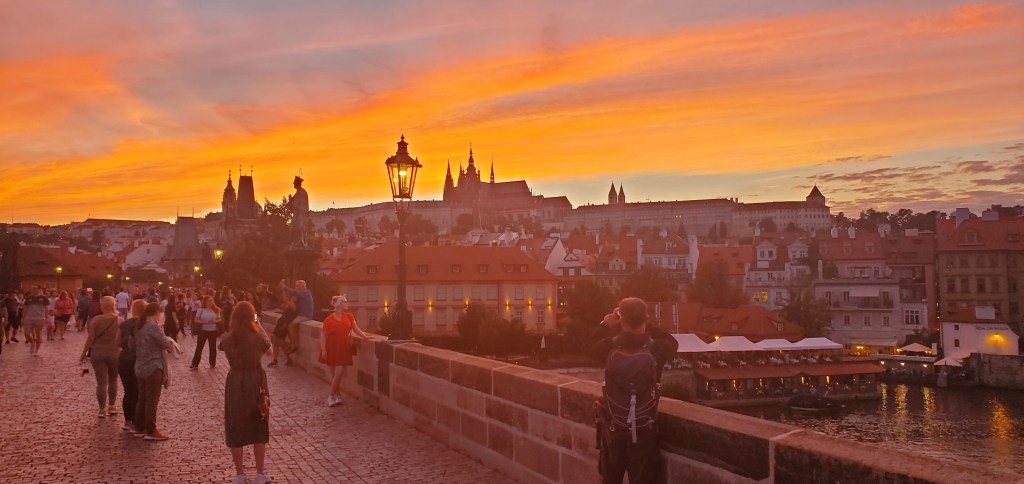
The sun sets over Petřín Hill, illuminating Prague Castle and the Charles Bridge. And as another American in Europe reminded us, the sun also rises . . . Until next time . . .
-
Dynamic Dalí Sculptures Provide Daily Dose of Culture
Dateline, July 14th, 2022
Somewhere floating out there in cyberspace is a photo of inside New York City’s Museum of Modern Art, standing beside Salvador Dalií’s most famed piece, The Persistence of Memory. Oh, wait, here it is!
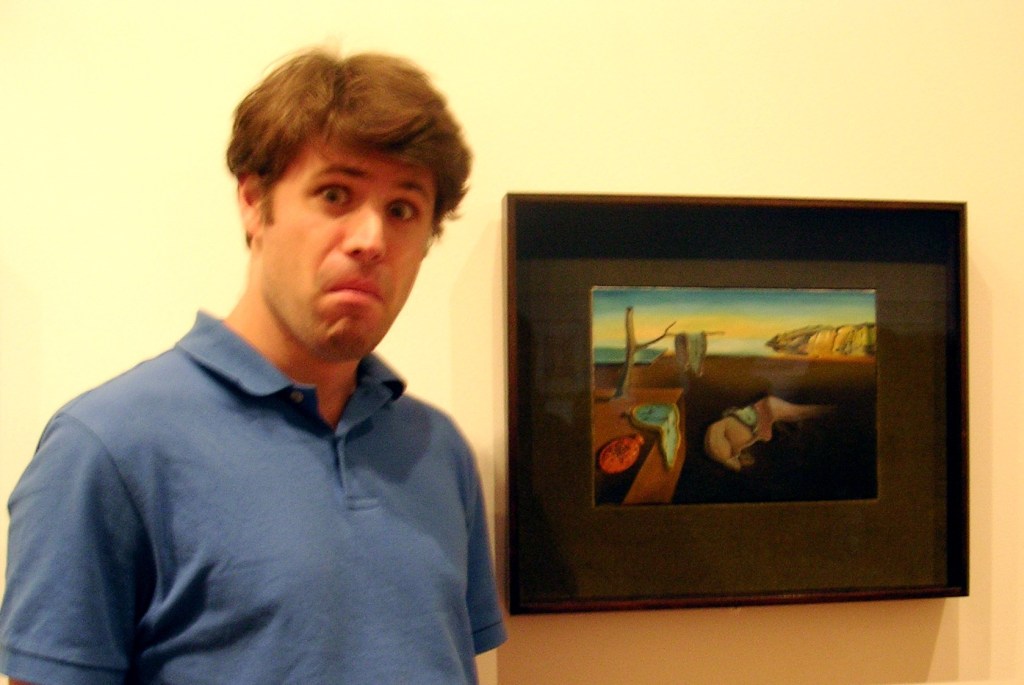
The author, in his younger days, attempts to look much older . . . Memory. It distorts. It decays. Sometimes, it destroys. I wanted to displays all of these feelings as I posed next to this timeless masterpiece at the MoMa on that sunny day back in the summer of 2006. But that moment, even though it was memorialized with a mediocre camera, is indeed, like memory itself, fleeting.
Memory is a tricky thing: It can weigh you down, but it can also lift you up. The word “nostalgia” is the same in nearly every single indo-European language, and literally means “return to pain.” To remember something, even fondly, can be a very, very painful experience.
If only someone had the fortitude and foresight to construct giant bronze sculptures. Some way to express the permanence of this fond sadness in a three-dimensional format.
To the fans of the world’s most famous surrealist, someone already has: Salvador Dalí. Yes, the artist was also a sculptor. And the largest private collection in the world of his sculptures is right in the center of Prauge, located less than 100 meters from Wenceslas Square.
A perfect choice, I thought, to imbibe in my daily dose of culture.
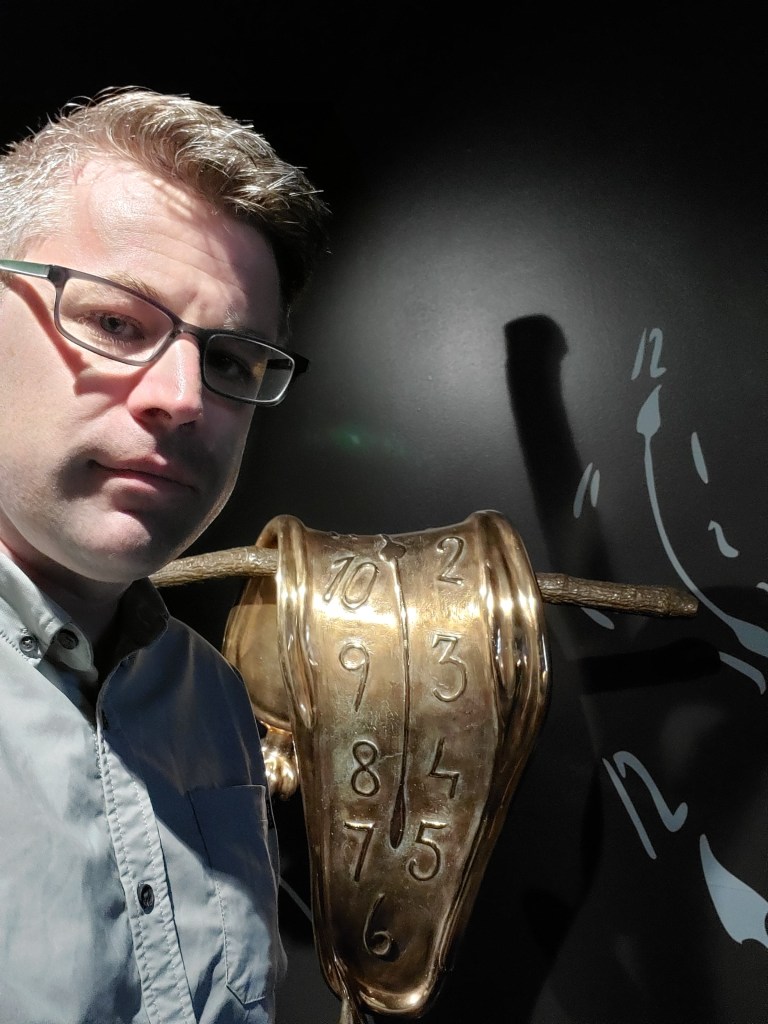
The surrealist lighting exaggerates the author’s greying hairline 😉 Some of these sculptures are small and petite, others are quite massive–even taller than I am.
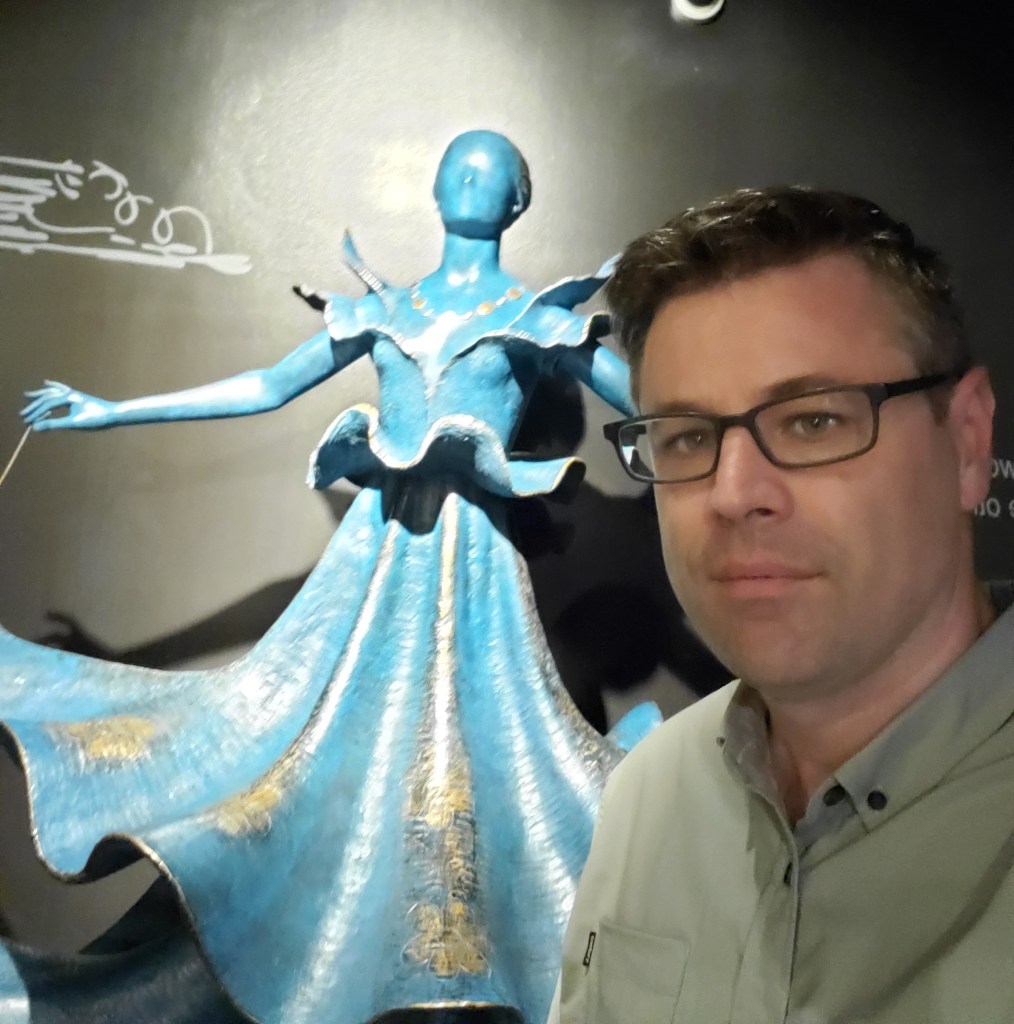
The statue is expressionless, and thus, so am I. The exhibit itself is dark and mysterious. All of the fixtures of this exhibit are in black, the bright lights serve to illuminate the shapes and colors of the world’s most famous surrealist.
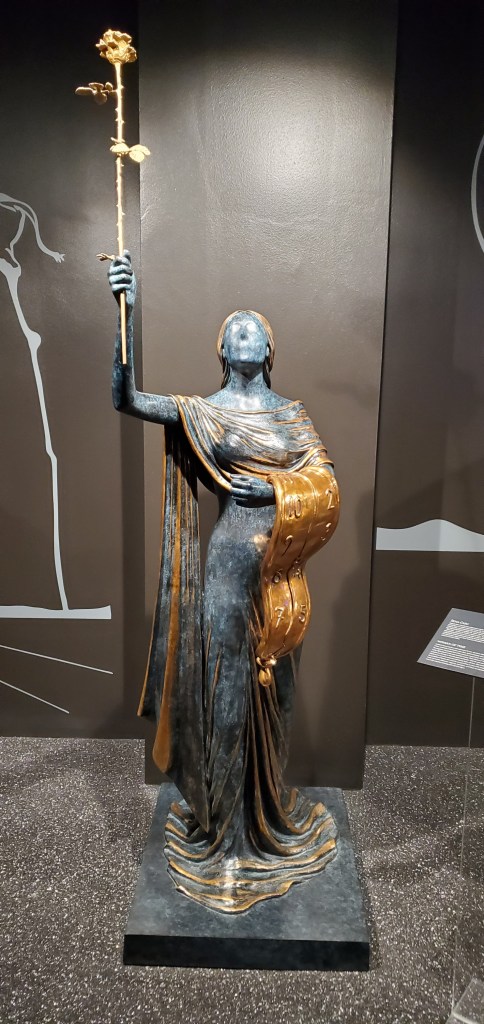
Onward! Like any good Dalí collection, one can see how the the return to common themes.
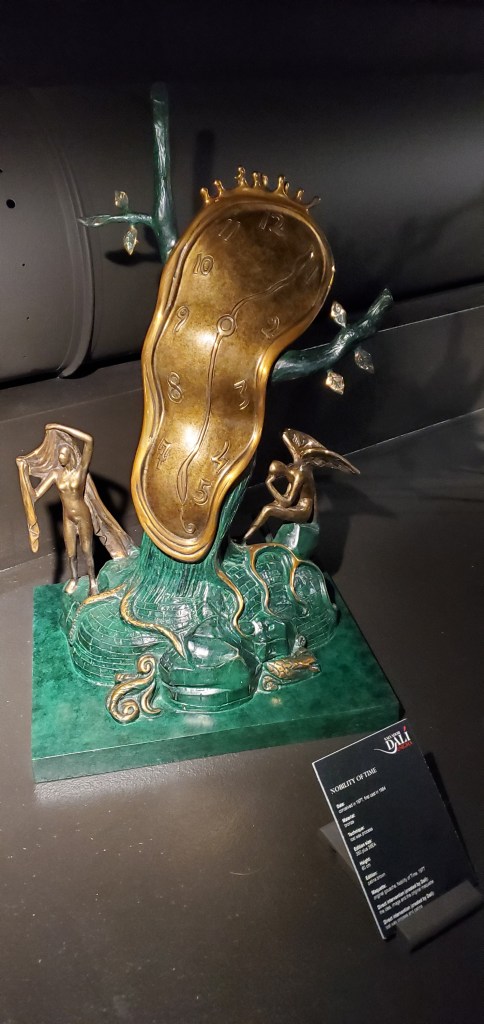
What time is it? Time to cry. And of course, something stamped in his signature style, yet stands out as entirely different from the rest.
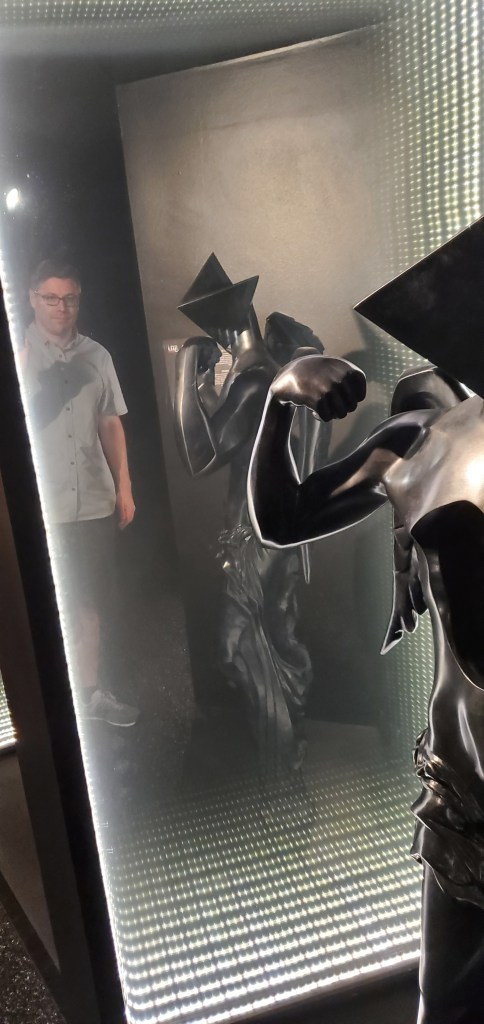
Welcome to the world of Art Deco Post Neo-Futurism! I spend a solid two hours examining this surrealist exhibit before I set out back into the real world. With my thirst for culture sufficiently satiated, I returned back to my flat. Storm clouds were forming, so I sought shelter indoors. After a brief thundershower, I briefly thought about cooking yet another meal in the common area kitchen of my student housing. Yet when I saw the evening sunlight illuminating the street outside the window, I scrapped that plan and headed to Czech-German restaurant right next door. Once seated, I took out my trusty pen and pocket notebook, and started writing:
My God in heaven, how beautiful this city is. Right now it is 8:15 pm, and after a brief thundershower, the sun is shining. The brief but potent rainfall has broken the day’s oppressive humidity, and it is now quiet, cool, and calm.
Prague is a good place to be. This morning I awoke on a mission: to prepare all my own meals, and to refrain from drinking any alcohol. This mission lasted until 8pm, when I finally surrendered myself to the beauty of this golden city.
Shortly after I wrote this, my food arrived. I devoured the Czech chicken and vegetables, and slowly sipped my pint of pivo. When my waiter asked if I wanted another, I simply said no. He looked at me as if I had suffered serious brain damage.
Maybe next time I will order that second beer 😉
Until then, tomorrow is a new day . . .
-
Peace is my Profession
Dateline July 13th, 2022
This morning I woke up with a mission: to fix my broken telephoto camera lens. Someone at a camera shop in Holešovice told me that there was a repair shop in Prague 4 that might be able to fix it. Since my future residence is also in Prague 4, I decided that I would strike two birds with one stone.
My first stop at the camera shop in Prague 4 was interesting. This is a part of Prague that might look like Paris or Vienna. As usual, I fumbled through what little Czech I understood, before finally asking revealing myself to be a native English speaker. Since the shopowner’s English was vastly superior to my Czech, I was able to explain what I needed without any problem.
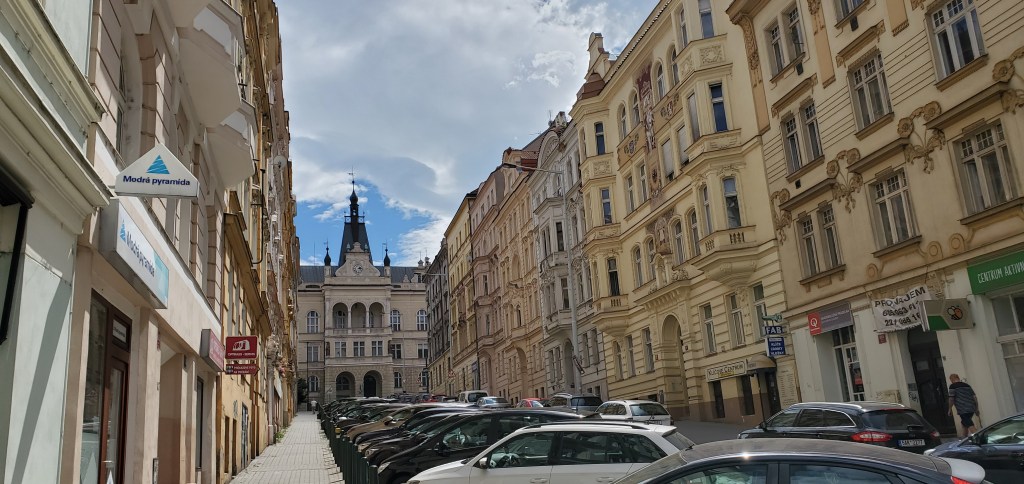
Parts Prague could easily be confused for Paris of Vienna. “It might take two months to fix,” said the shop-owner.
“No problem, I’m here for two years,” I replied. “Maybe more.”
The shop-owner chuckled at my reply. “Bye-bye,” he said.
“Have a good day,” I said, as I exited the door. No sooner than the words left my mouth than I realized that the standard Czech greeting for “hello,” “Dobrý Den,” quite literally means good day. As soon as that thought occurred to me, I was the one chuckling as walked the picturesque streets of this particular part of Prague 4.
Such beauty would not last forever. I needed to take a tram to a bus that would take me to my future student housing for the month of August. I boarded Tram 11, then after a few stops I transferred to bus 139. The diesel engine roared as it made its way to the far reaches of the Prague city limits. In a way, this was bold territory for me. After all, it was my first time outside the tram lines of the city of Prague.
The edge of Prague reminded me somewhat of my brief time when I lived at the edge of Austin’s city limits. In one direction, you can see the city skyline. Turn around, and you see wilderness . . . sort of. There’s some new development that is mostly apartment complexes and shopping mini-malls, and there is also a great expanse of public parks and undeveloped land. I got off the bus and took a photograph of what will be my new home for the month of August. Rest assured, this part of Prague will never be confused with Paris or Vienna. One look at this Soviet-style panel building, and you would think you were in Moscow or Warsaw. Well, I thought to myself, at least I’ll have an idea of what is what is like to live in the USSR.
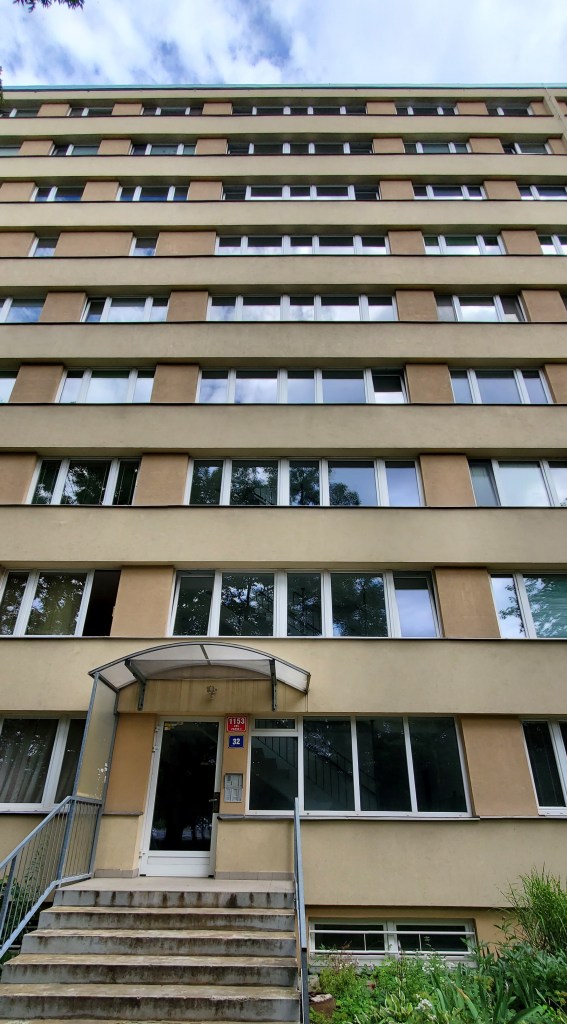
This part of Prague could easily pass for Warsaw or Moscow. I didn’t stay long. I quickly hopped back on bus 139 opposite the way I came–I wanted to go back to the center of Prague. I ate lunch at a Vietnamese restaurant, but I went with a choice safe my Anglo taste buds–Pad Thai. Once my calories were sufficiently replenished, I decided to take a walk through one of Prague’s many pristine parks: Havlíčkovy sady.
Bordered by one of Prague’s many manufactured canals to the south, and sandwiched between several intersecting tram lines, Havlíčkovy sady features step hills, luscious green trees, many fine renaissance-era style statues, and something else entirely: Soviet gun turrets.
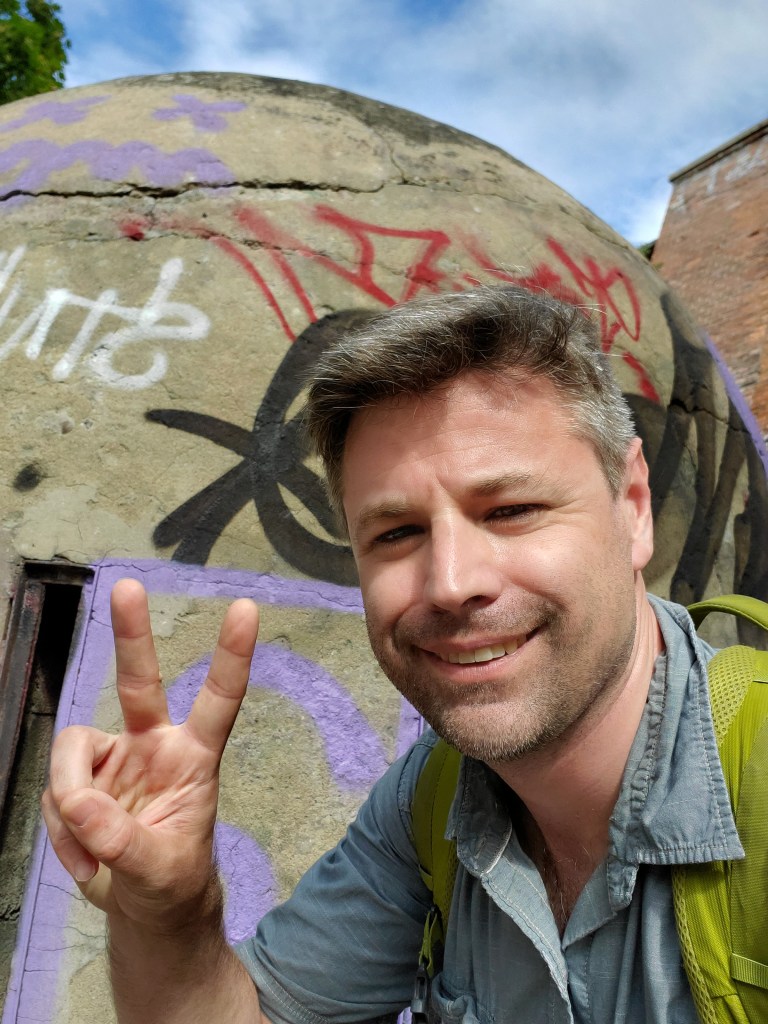
The author pauses from his hike to promote his profession of peace. I saw one such gun turret that had been graffiti-ed many times over by Czech dissents over the years. I thought of the historical significance of the land of which I was standing: The Nazis wanted it, the Soviets wanted it, and the Czech’s just wanted this little corner of the earth to call their own. I quickly posed for a selfie and flashed a peace sign. I wanted to show my reverence for President Havel and the rest of the Czech underground who defeated their imperial occupiers without dropping a single bomb or firing a single bullet. When I saw what I looked like, I couldn’t help but marvel about the man I am slowly turning into.
For as long as I can remember, I simply understood that my grandfather, John J. Donohue, Jr., was a World War II Veteran. The local VFW chapter was one of his many civic obligations, he marched with his fellow veterans at every Memorial Day Parade, and he was only 18 years old when the Japanese bombed Pearl Harbor. Yet it wasn’t until I was 26 years old that I finally asked the man, “what exactly did you do you in World War II?”
“Wellllll,” he said with his gruff Bronx accent, and then he proceeded to tell me everything. Bits and pieces were familiar to me, such as how he enlisted immediately after the Japanese bombed Pearl Harbor, how he was assigned to the California coastal defense at Monterey, and how the U.S. military taught him to speak Italian before sending him off to France. Some things were very new. This particular story stood out:
“I was in the Signal Corps at the Battle of the Bulge. I was a Sargent. I was my job to relay the information from the men at the front lines to the officers at back. One thing that I’ll never forget was how bright the sky was that night. So bright! I couldn’t believe it. I had never seen the sky so bright at nighttime, not even during the day. There were explosions everywhere, happening constantly. It was brighter than fireworks on the Fourth of July. After that, I decided that I had no interest in fighting any war ever again, nor did I have any interest in anyone else fighting any war ever again.”
Let me tell you something: If I had a nickle for every time my grandmother called me “Johnny,” I’d be a very wealthy man right now. As I’ve gotten older, I understand what she meant. I see my hair graying slightly at the sides into a distinct salt-and-pepper look–the so-called “silver fox” look that John J. Donohue, Jr. took to his grave. I’m his living emissery, and whether I’m in Prague or Peru, I’ll promote the message of peace wherever I go.
I continued hiking up the hill, then wandered around Vinohrady to soak up some more sights of that unique neighborhood. I walked until me feet hurt, and by evening, it was late, hot, and I was tired. Where did I go to relax and unwind?
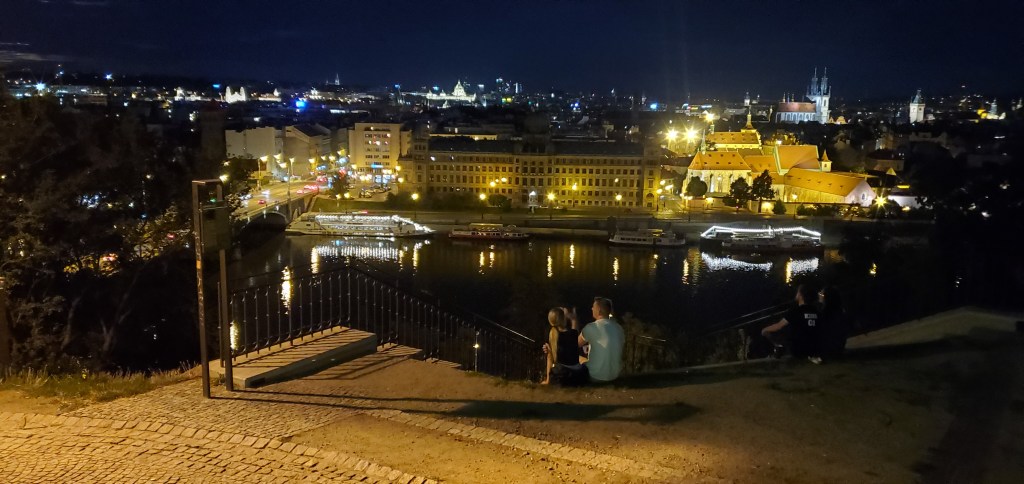
A perfect pair enjoys a perfect night atop the city of a thousand spires . . . Of course, where else but the Letná Beer Garden. I saw the moon rise over the city of a thousand spires, felt the cool air as the temperature dropped, and read more about the doomed romance between Tomaš and Theresa. Their sad story seemed incongrous juxtaposed against the happy couples enjoying their night under the light of a full moon. I thought to myself, someday, perhaps soon, I will invite just the right person to enjoy the Letná Beer Garden with me, and all of it’s magnificent splendor.
Tomorrow is a new day . . .
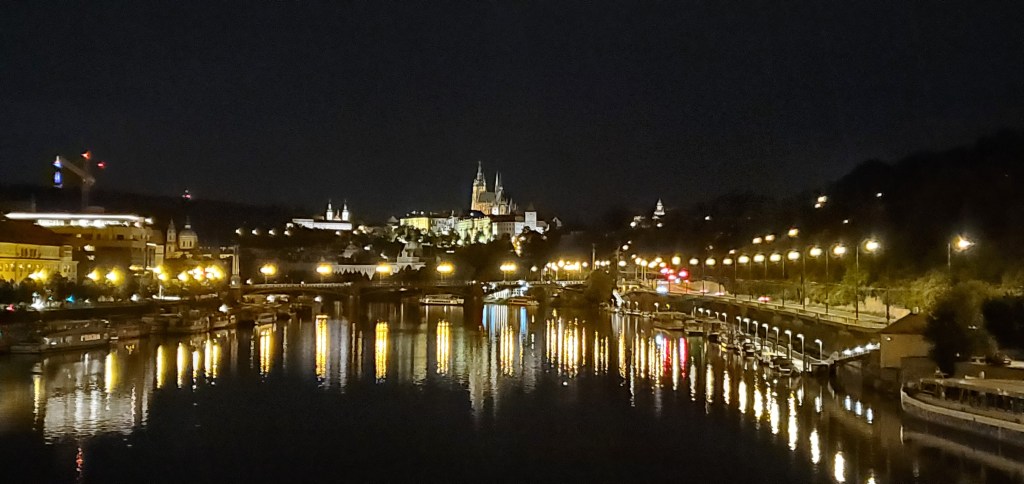
Paris is not the only city of light 😉 -
First trip to Vinohrady
Dateline: July 12th, 2022 (afternoon)
Now that I had seen a bird’s eye view of the Golden City, I decided it was time to scout out one of Prague’s most pristine neighborhoods from ground level–a neighborhood that was once royal lands, a neighborhood where beautiful buildings are punctuated with several pretty parks, a neighborhood with cosmopolitan restaurants that illustrate Prague’s increasingly international composition.
I am referring, of course, to Vinohrady. I emerged from the steps of the Metro Jiřího z Poděbrad located right in the heart of this historic district. As I did so, I was greeted with 360 degrees of greenery. This metro stop deposits you on the southwestern edge of one park, and just diagonal to you, right across the street, lies another park.
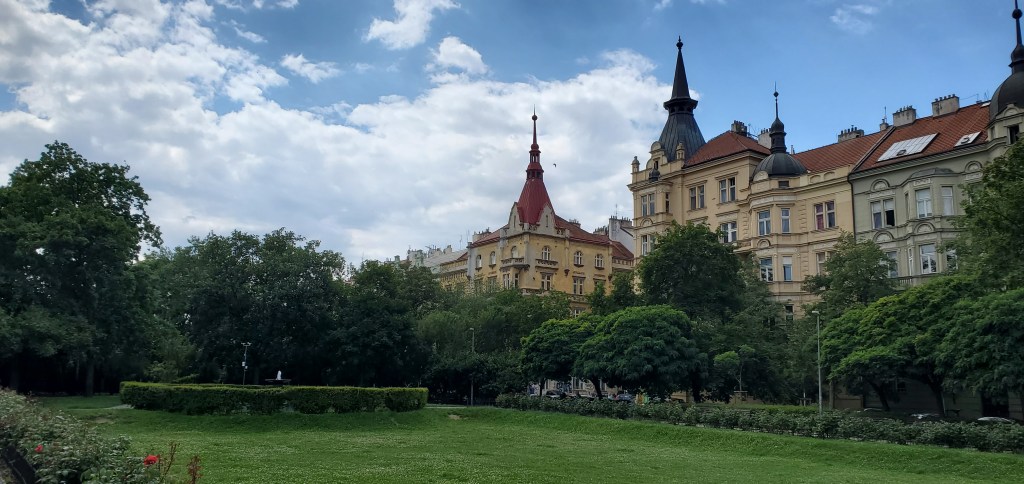
A secluded view from within the city of a thousand spires . . . I crossed the main thoroughfare of the aptly name Vinohradská and set to explore the lovely, tree-lined paths amongst the gardens at Sady Svatopluka Čecha. As I did so, I saw something that reminiscent of another major city in which I used to live.
I saw a young man with a portable barber’s kit giving a haircut on the lawn of Sady Svatopluka Čecha. The young man, the barber, had a somewhat respectable operation going on: He had his traveling case of equipment mounted on a table, and his client was patiently seated on a folding chair. He had also staked a a sign into the lawn that read: “Pay for haircuts so you can help us travel.”
“Brooklyn!” I both gasped and exclaimed at the same time. Have you ever seen the Akira Kurosawa film Dursu Uzala? Remember the opening sequence when Captain Arsenyev finds all that is left of his deceased comrade? He sees what he came to find and simply gasps and exclaims, “Dersu!”
Yes, it was that sort of moment. Just as Captain Arsenyev knew what had become of the fate of his close friend, I knew that I would find Brooklyn Hipsiters in Vinohrady. I just knew it.
When the barber heard my gasp/exclamation (gaxclamation?) he paused his hair cutting regimen and turned towards me, as did his client. Oops! My cover was blown. I didn’t bother to take any pictures, I figured it was only a matter of time before a local police officer pulled the plug on this shanty little operation. The idealistic reporter that once resided within me wanted to ask the barber questions, but the veteran reporter who has lived and worked in New York City for ever eight years already knew the answers.
Any question I could ask would have been rhetorical in nature, such as:
Don’t you think it’s a little silly to write your sign in English when most people who read are Czech?
Don’t you need running water in a barbershop?
How many haircuts will you have to give just to recover the cost of your trans-Atlantic plane ticket?
Do you have any sort of business permit for this sort of activity?
As I said, all of these questions have obvious answers. Yes, it’s silly to advertise your business in English, even in expat-packed Vinohrady. Yes, you need running water to give a proper haircut. No, it is not possible to recoup the cost of a plan ticket from New York to Prague by giving haircuts to random-passersby in a public park.
Thus, Vinohrady is much like gentrified Brooklyn: beautiful buildings, pristine public parks, a short subway ride to a major city center, and a plethora of American 20-somethings living off their parent’s money to subsidize their little adventure.
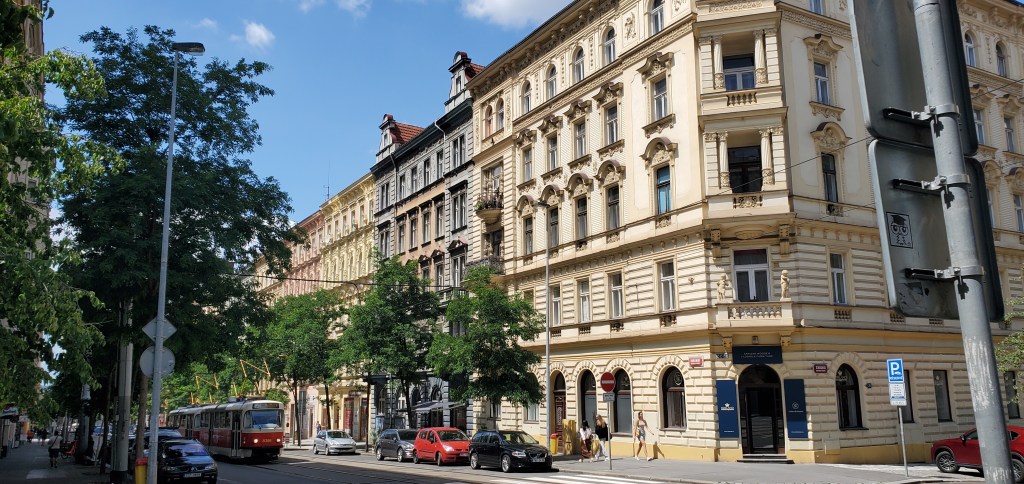
Vinohrady looks a little bit like hipster Brooklyn, only more beautiful I walked around several of Vinohrady’s fine parks before my hunger got the best of me. There were many fine restaurants of an international array throughout the neighborhood: French, Vietnamese, Mexican, and many others. However, one such local restaurant served simple Czech fare, and everything about that restaurant seemed to speak to me: Sit down, Kevin. Eat here. You will enjoy it. I promise. Sure enough, the local food did not disappoint. A simple plate of meat and potatoes mashed in with a fine vegetable like Nanna Petriček used to make for me was a perfect meal for the occasion.
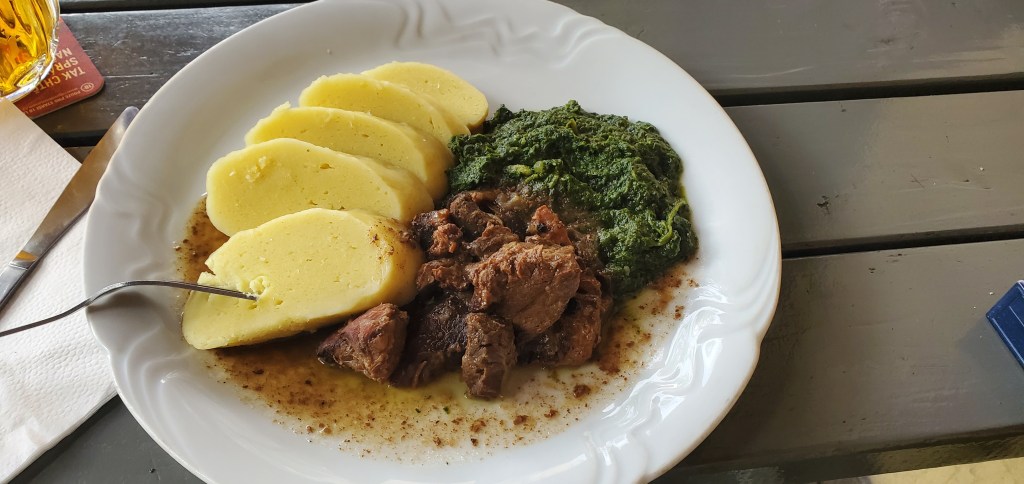
Czech’s like their meat and potatoes. After eating, I walked the streets a little longer, and headed home. It was hot, I was sweating, so I decided to cool off with another drink atop the city of Prague at the Letná Beer Garden.
Tomorrow is a new day!

Letná Beer Garden is always a good idea in the peak of summer 😉 -
Terrific Tuesday at Petřín Park
Dateline, July 12, 2022
Rarely does a sequel outperform the original.
Then again, rarely does the sequel contain the sequence of events that was supposed to be filmed in the original.
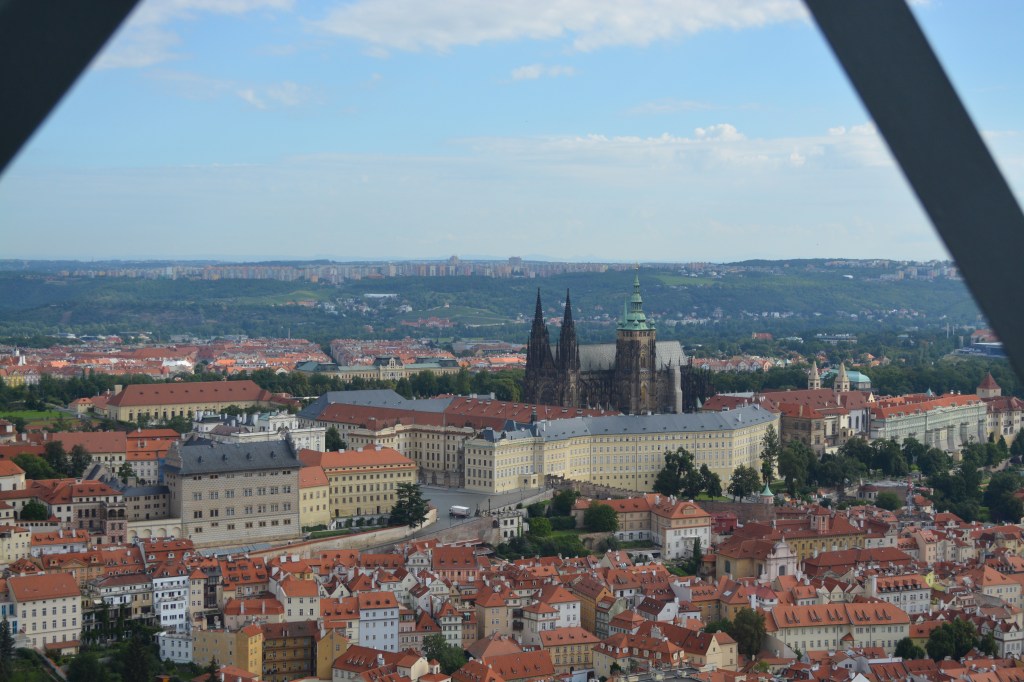
One can catch a great view of Prague Castle from the top of Petřin Tower. Yes, my triumphant return to Petřín Park went fantastically well. I do the tram in the correct direction this time, and arrived at the park so early that I didn’t even have to wait in any lines when I arrived. Or to put it another way, the only person was me, because I arrived at the tram line on the base of Petřín Hill even before the visitor window was open for business!
I waited patiently in the lobby for five minutes, then purchased my ticket to the top. Yes, I knew I could make the hike, but I wanted to get to the top of the tower before it was flooded with tourists.
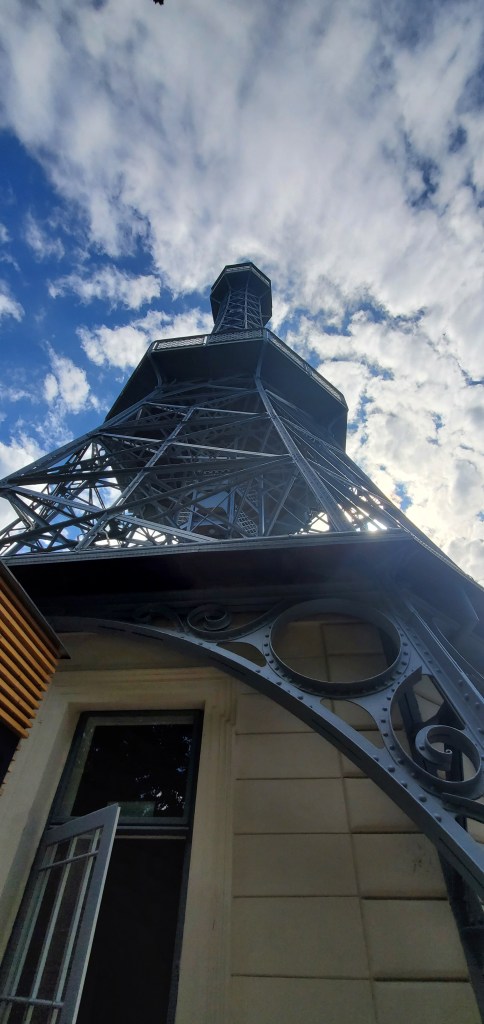
The sun rises, and that means the tower is open for business! The purpose-built tram departed right on schedule at 9 am. There was only one other person who braved the early morning sunlight to ride to the top with me. The tram slowly but surely made its away atop the steep slope situated on the outskirts of Malá Strana. It was a short, sweet ride to the top, and when the tram came to a full a stop, I quickly exited and made like a bee to the main entrance of Petřin Tower.
“Dobry Den.”
“Dobry Den, mluvite Anglicky?” I was in a hurry. No need to attempt to fumble through whatever limited Czech I know, I just know I need a ticket asap!
“Of course,” he said.
“Oh, thank goodness, I said. “I have this ticket.”
“Yes,” he said, examining. “This is your tram ticket, and it’s only one-way, you will need to purchase another ticket if you want to ride down, and you still need to purchase another ticket if you want to walk to the top of the tower.”
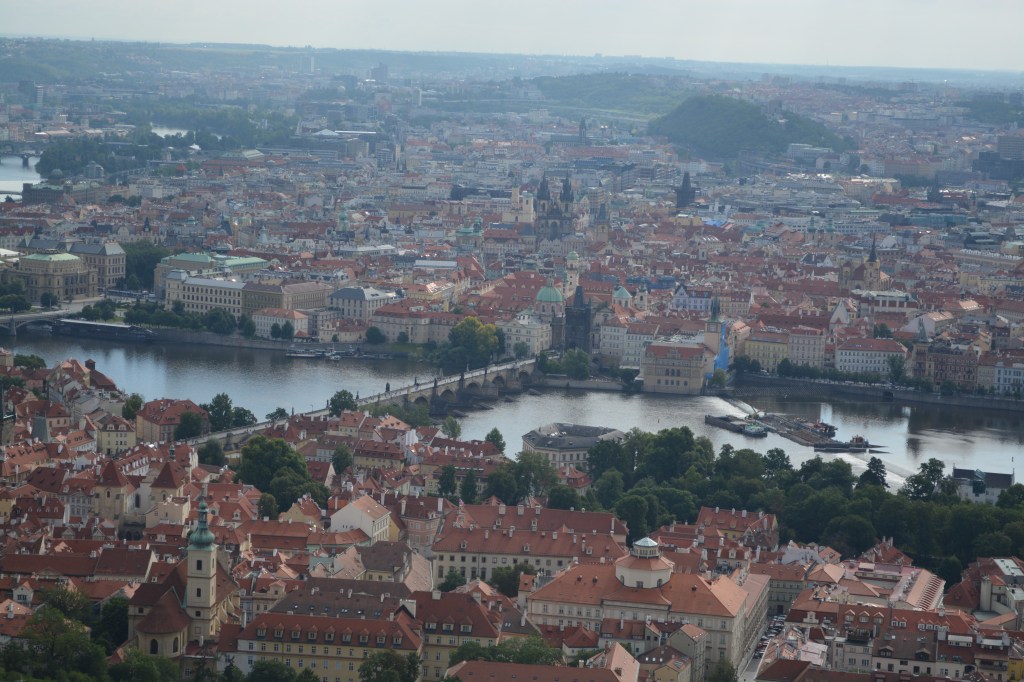
How do you know it’s early? Simple: There are no tourists on the Charles Bridge! “No problem,” I said, “how much is the ticket?”
“150 crowns.”
I reached for my wallet and fumbled through my various coins so that I was able to pay exact change.
“Here you go,” I said. “You speak very good English, by the way.
“Thank you,” said the man behind the counter, smiling so much that he blushed.
With that cheerful interaction, I was merrily on my way. I took photographs periodically as I climbed the 299 steps to the top. It was a sunny clear day, and I could see not only Prague but much of the surrounding Bohemian countryside as well.
As I walked up the steps, I thought of the history of the tower and its marvelous architecture. Constructed in 1891, it is a smaller scale model of its much more well known older sibling in Paris, the Eiffel Tower. Whereas the much larger Eiffel stands proudly at 300 meters tall, Petřín stands at 60 meters. However, since Petřín stands atop a hill, its observation deck is 378 meters above sea level, so those who visit Petřín Tower in Prague actually get a more majestic view!
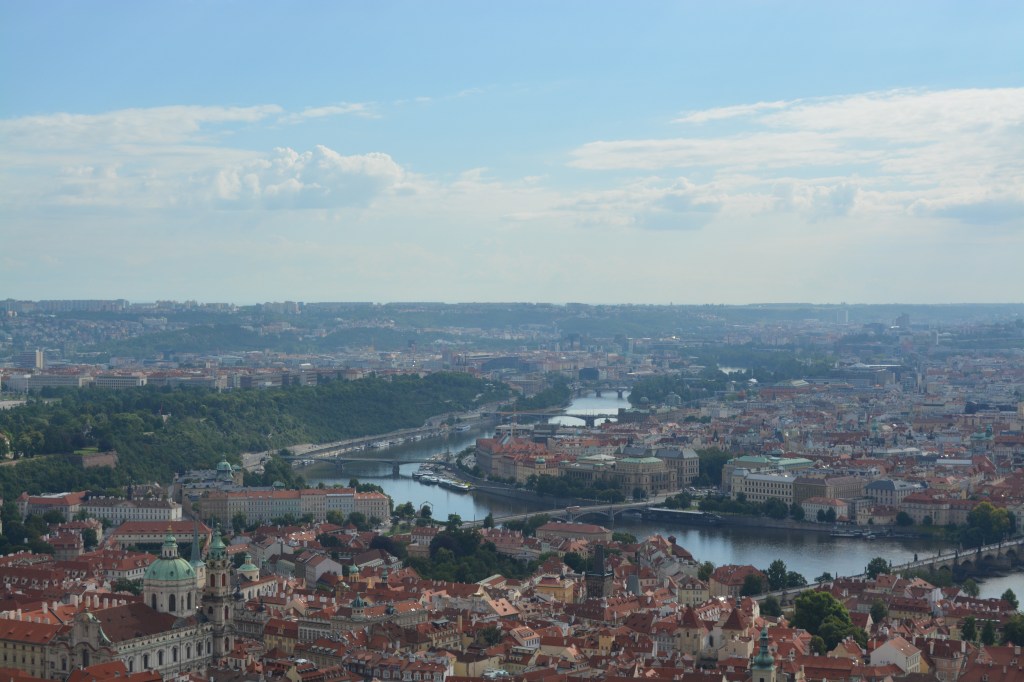
So much to see in the Golden Hour of Prague’s morning light! And this view did not disappoint! The early morning light was just perfect. Before the the midday sun overwhelmed the optical senses, I could see the old city of Prague in its true colors, along with the vibrant green of Letná Park and the muddy blue of the Vltava River.
That wasn’t all I could see. I also looked straight down at the people 60 meters below me. As I did so, I marveled at how the literal and metaphorical height of humanity illustrated how small we humans really are.
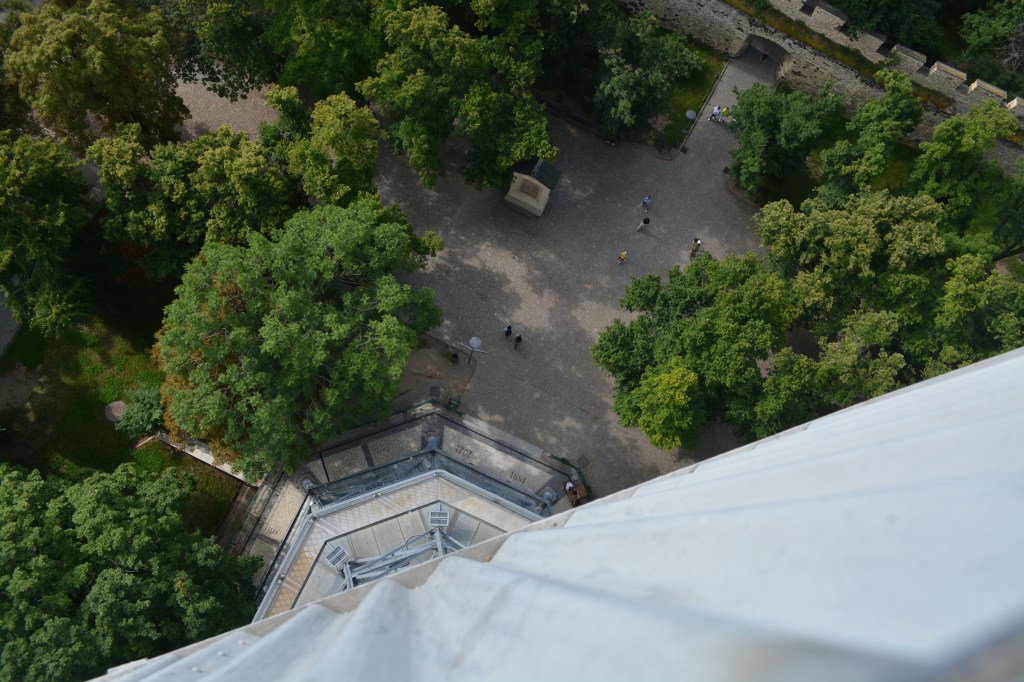
A view not for the faint of heart or afraid of heights 😉 While I was taking photographs, I spoke with the guide at the top of the tower. She was reticent to speak at first, insisting that she didn’t much English, but I kept persisting with what little Czech I knew. This must have boosted her confidence, because she understood right away that her English was better than my Czech. She shared stories of her time at Spartica, a giant coliseum that the USSR would fill with young athletes every five years to boast the superiority of Soviet-inspired athleticism. “It was a joke,” she said, with a nostalgic smile. “Just something for the kids. The real stadium is over there,” she said, pointing the other large, nearby stadium that has hosted numerous “decadent West” musical performances since the fall of the Iron Curtain.
I thanked the woman for sharing her stories with me and bade her farewell as I walked down the 299 steps to the base of the tower.
Next stop, Vinohrady!
-
Magnificent Monday in Petřin Park
Dateline: July 11th, 2022
It has now been ten days since my arrival in Prague. I am slowly but surely adjusting to a new country and a new culture.
Thoughts after 10 days: I am simply taken aback by the breathtaking beauty of this place. Although the language barrier is a tad overwhelming, I manage. I continue attempting to practice what little Czech I know whenever possible. This process of trial and error is mostly error, but the people I speak to adore me for trying.
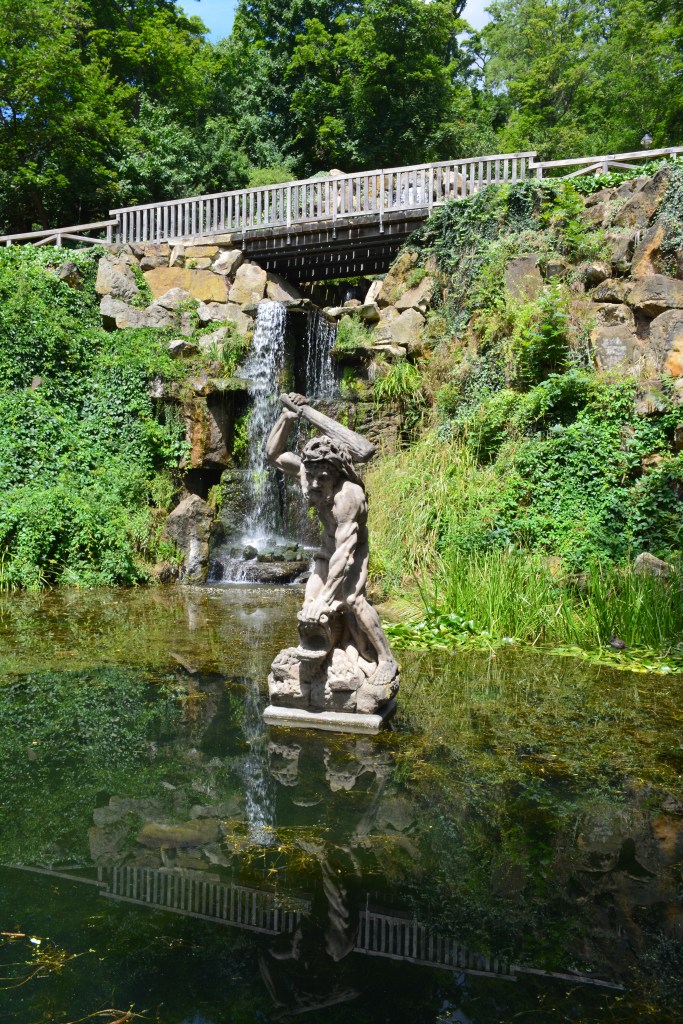
Greek influence is evident in one of the many ponds in Petřin Park. Today I woke up at 8:30 am. At least one of my prayers from yesterday’s service must have been answered, because this was the first time I slept for eight consecutive hours since my jet-lagged arrival in Prague. I awoke energized and yet to start my day.
After a short morning neighborhood walk, I had a quick breakfast of bananas and herbal tea, showered, shaved, and was ready to start my day. I had initially intended to take the 12 train to Mala Strana, upon which I would beat the crowds and climb to the top of Petřin Tower. On the plus side, I hopped on the right tram. On the downside, it was moving in the wrong direction. Oops!
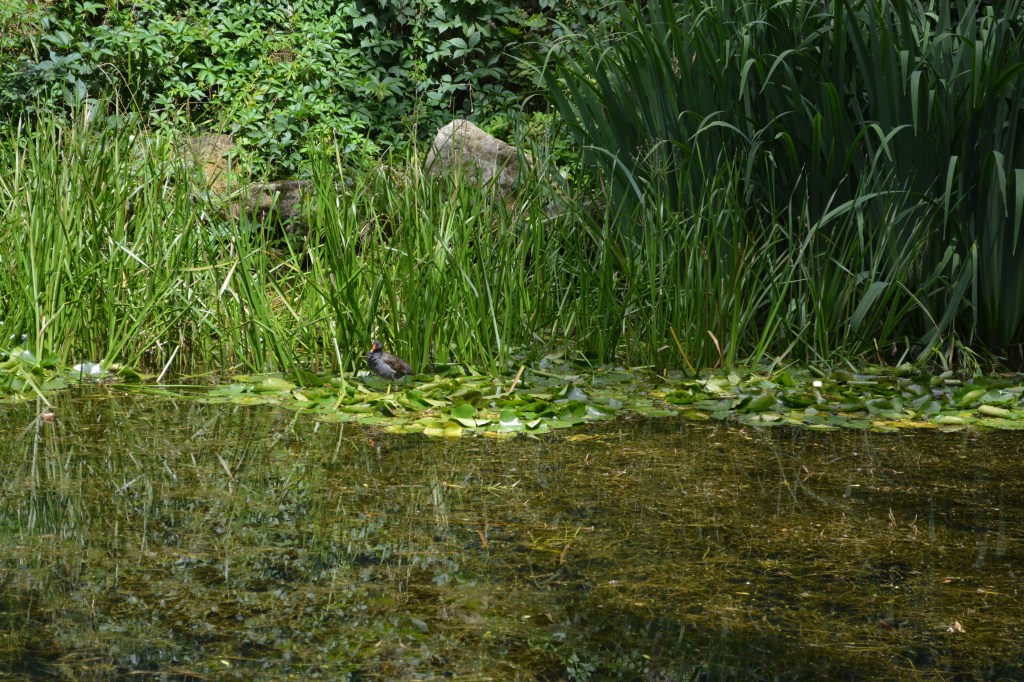
One of the many feathered friends of Petřin forest basks on the water’s edge. Fortunately, after only three stops, the tram had reached the end of its line. And since the people who run Prague’s public transit system understand that most Americans are generally clueless, there was even an automated announcement in English telling riders that this was the last stop and that we should please get off.
When I finally did arrive in Petřin Park, it was almost noon–far too late to avoid the peak crowds at Petřin Tower. Not one to worry, I set out to hike the grounds of the magnificent park instead. And oh my goodness, Petřin Park is quite beautiful. It is beautiful beyond words. It’s like a combination of Bear Mountain State Park, The New York Botanical Gardens, and something else altogether. Like many breathtakingly beautiful sights in the city of Prague, it must be seen to be believed.
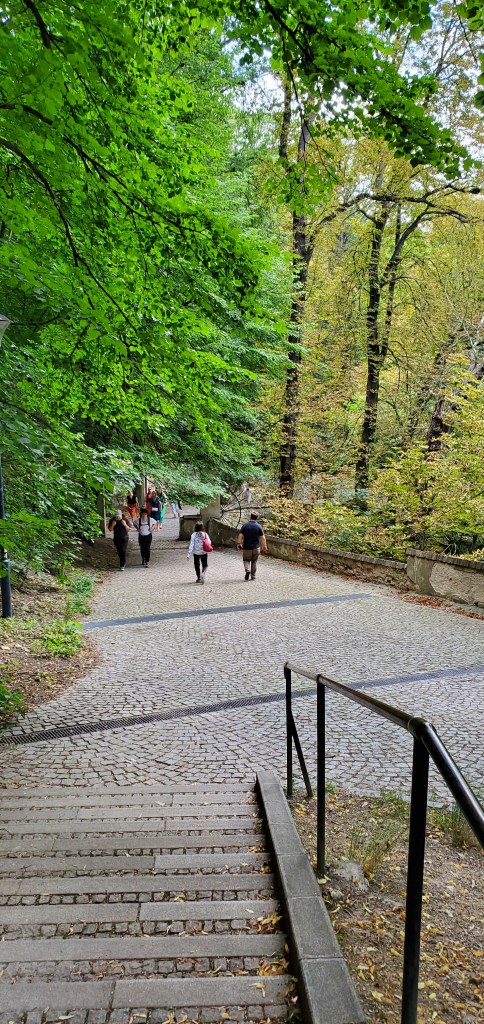
One of the many winding pasts one can wander through . . . On my way down from the top of Petřin Hill, I stumbled upon a secluded restaurant that was built literally on a ledge midway between the crest of the hill and the city streets near by the Vltava River basin. It was two o’clock now, and I was hungry, so I took in seat in the forest restaurant, ordered the aptly forest salad and a glass of forest gin. As simple is this sounded, this caused great confusion with the waiter.
“Gin?” He asked incredulously. “No, we don’t have gin.”
“It’s on the menu,” I said. “Forest Gin, you have it listed as today’s special.”
“No,” he said. “Is not possible. We don’t have gin, I don’t know what that is.”
Frustrated, I got up from my chair and walked over to the bright, bold-face letters on the sandwich board by the restuarant entrance. I spoke the words as I pointed to them: Forest Gin.
“Oh, gine.” said the waiter. “Yes, we have gine.“
“Sorry for the confusion,” I said. “In English, it’s pronounced “gin.”
“Yes, one “gine.”
“Fine, yes, one gine. I re-took my seat. I could tell that this man was not in any hurry for an English pronunciation lesson, and why would he? How many English-speaking tourists completely skip over this hidden gem of a restaurant deep within the woods of the park? Whatever, I thought to myself. There loss is my gain. I opened my book of Czech fairly tales while I waited for my order to arrive, and enjoyed the calm, peace and quiet of the restaurant almost entirely to myself.
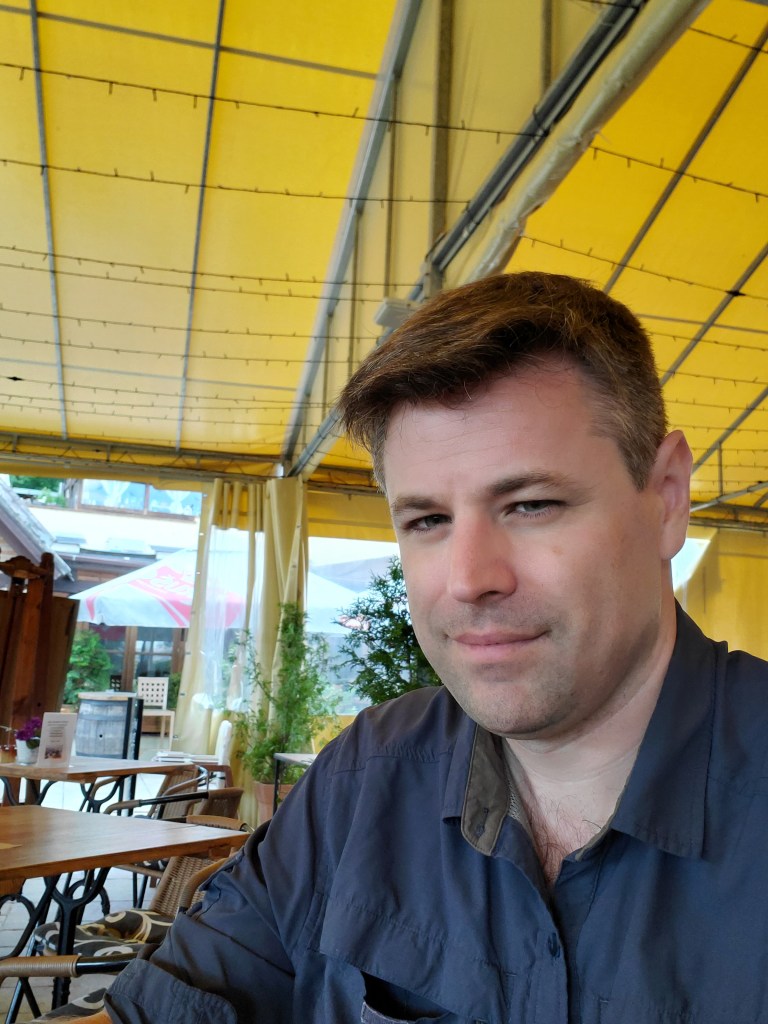
The author finds it amusing that one would try to correct his English accent. After I finished my meal, I walked back down to street level and visited the nearby Czech Museum of Music. It’s small museum, but packed with some of the finest instruments ever crafted in Czechoslovakia. They also allow visited to play some of the instruments. I even got a chance to tinker around with a Moog synthesizer. Hot Dog!
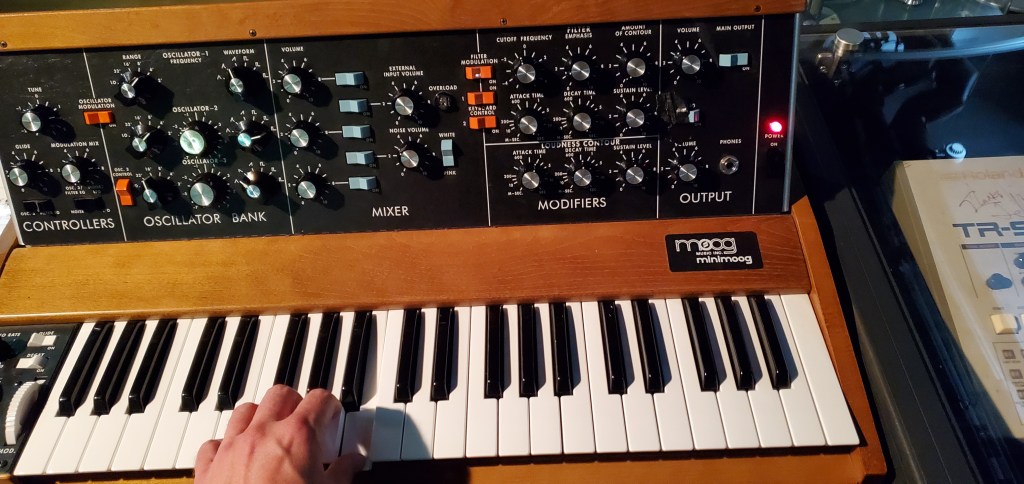
I’m no Zia McCabe, but I’m no novice either when it comes to keyboards 😉 Then I crossed over Most Legii (Legion Bridge) and admired the lovely views of the Vltava River below. Just south of the bridge lay an island, and on the island, one could rent paddleboats. In every direction, I could see legions of tourists enjoying their paddleboats on this beautiful summer’s day. Even though I had been hiking for hours, I was so excited that part of me wanted to just run down to the island and join a group of tourists. I wanted to say, “hey, need a paddle partner? Pick me!
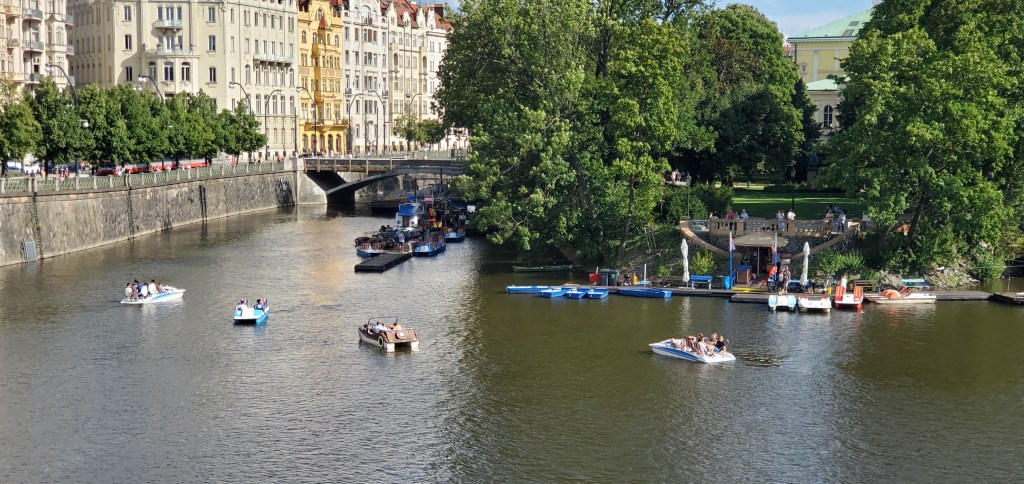
Tourists and locals alike enjoy Prague by paddleboat But I waited. I knew the time would come soon enough when I could share a padlleboat ride with someone special. Good things come to those who wait . . .
Instead of making myself a spectacle, I headed back to the Joyce. Oddly enough, I did end up introducing myself to some tourists. I had just finished my meal and was about to leave when I overhead a man say that he lived in Soviet-occupied Romania. “I didn’t watch a Stars Wars movie until I was six years old,” he said. “The Russians wouldn’t let us watch any of them until 1987. And even then, the only one they let us see in the theaters was “The Empire Strikes Back.”
“Pardon me,” I said. But I just had to ask: What was your reaction when you found out that Darth Vader was Luke Skywalker’s father?
The Romanian looked at me and smiled. He paused for a moment, as if to emphasize that the answer to him was obvious. Then he spoke: “Dreams can come true. I hadn’t even seen the first movie, so much of that was lost on me. But everything else, just to see it, just to see what was on the other side. It was simply amazing.”
We spoke some more about classic films with one of the waitstaff whose shift had just ended. She asked me was from, and when I told her Wethersfield, her eyes dilated to the size of saucer plates. “Get outta here,” she said in amazement. “I’m from Manchester.”
It’s a small, small world . . .
All of spoke about various films, we laughed. We agreed that violence is the last refuge of an incompetent scoundrel, and as the sun set, we parted ways.
Tomorrow is a new day . . .
-
Sunday Service at St. Clement
Dateline, July 10th, 2022
I wake up early. Maybe a little too early. I don my Sunday best (or at least the best of the clothes I was able to fit into my two suitcases upon my trip to Europe) and head out the door.
It’s a short tram ride from Holešovice to St. Clement Anglican Church, and that’s exactly where I’m headed. I board the tram, and as we cross over the Vltava River, I see a young man and a young woman engaged in the act of physical fornication on a bench in Lannova Park. Something tells me that I won’t see this people in Church today.
I step off the tram and am greeted by the sight of Beer Spa Beerland. Something tells me that I won’t see any of these patrons at the Sunday service either. It’s a short, one block walk from Beerland to the church. Once I arrive, I see that the sermon doesn’t start for another half hour. I take a short walk through the neighborhood, and it’s quiet. Most people are still sleeping off their night of Saturday debauchery. The weather is nice and cool, and the morning sun shines brightly from above.
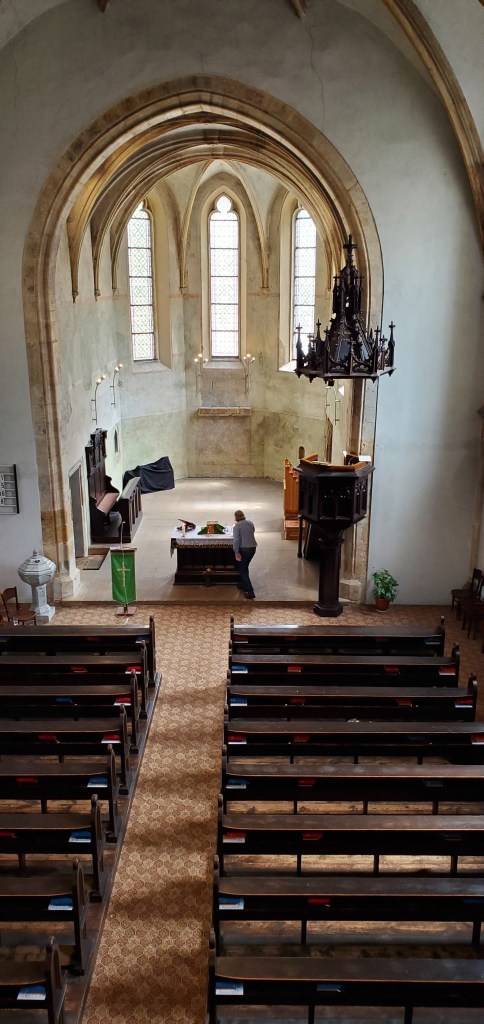
A view from the organists perch inside St. Clement’s Church Finally, it’s time. I walk into the church, and survey the surroundings. It’s a spartan interior, true to the reformist visions of the anti-Papist Protestants from centuries ago. There isn’t even a crucifix.
I sit down at a pew in the back, I turn the hymn book to the appropriate page. Once I see the words, I realize that this sermon is entirely in Czech. Oops! The English language sermon doesn’t start until 10:30. However, I hear the sounds of the organ pipes flood the church’s interior. I rise to start singing, then realize that everyone else is still seated, so I sit back down. Apparently, it’s the opposite procedure of how Americans sing their hymns. Czech’s sit while singing in Church, Americans stand.
We finish singing, and everyone else stands up, so I stand up. This process repeats itself. There’s a reading from the Old Testament, a hymn, the New Testament, a hymn, and then the Gospel. Then the sermon starts, and from what little Czech I do know, I understand this gist. I hear the words človek, zviřat, medvěd, and Ukraine. From his words and his body language, I understand the pastor is making a passioned plea for Peace in Ukraine. When the sermon is over, the congregation applauds, I applaud with them. We sing a final hymn, and shake hands with the pastor before exiting back into the rest of the world.
Now I have half an hour before the English sermon starts. I stop for an espresso and a chocolate-covered calorie bomb at a nearby pastry shop. It’s delicious. I sip my espresso slowly, and before I know it, half an hour has passed and it’s time to return to St. Clement’s. I take my same spot a pew in the rear of the church, sit down, and when the music starts, I’m ready to sing . . . Or at least I thought I was. This time, everybody stands, like we do in America. So I stand, open the hymn book, and realize that I don’t have an English hymn book. The woman seated next to me sees my predicament. And with a baby in one hand, she deftly spins around, takes an extra hymn book from one of the parishioners, opens it to the correct page, and hands it to me with a smile. Talk about a miracle!
The service continues much in the Episcopal tradition to which I am accustomed. We get down on our knees and prayer for everyone–even our enemies. We wish peace to our neighbors. We take communion. And when the service is over, we exit back to the rest of the world.
It’s almost noon when I walk out, and the sun’s heat is starting to become oppressive. I’m already sweating in my long-sleeved shirt and slacks, so I head back to my Holešovice flat to change into a t-shirt and shorts. I spend about an hour practicing Czech on duolingo, humbled by how little I could understand from the Czech sermon. Then I sleep for a few hours. Apparently, I’d awoken up so early in hopes to make it to the early morning sermon, that my body had rebelled against me by mid-day.
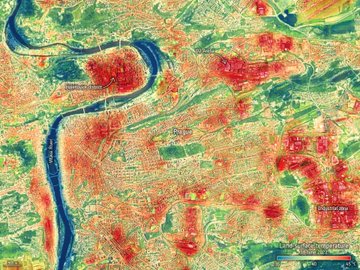
Satellite imagery shows Holešovice is too damn hot! In the evening, it’s still hot. I read the news and see that Holešovice is quite literally the hottest neighborhood in Prague, according to data collected by the International Space Station. Source:
My body can’t stand the heat, and my mind tells me to head back to Letná park, where cool breezes whip over the hills of western Prague, where trees will shield me from the summer sun, and I can enjoy a nice pivo or two amongst good company.
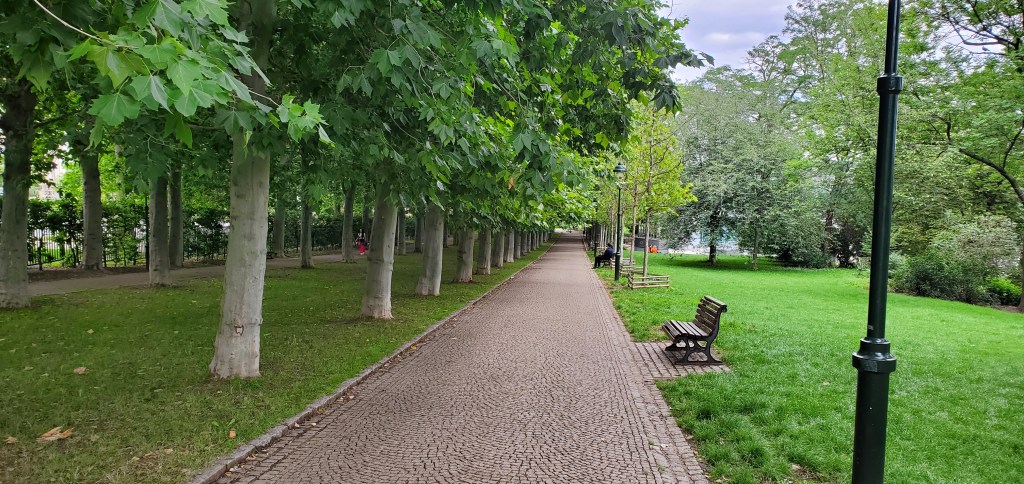
Never to hot, never too crowded: the author cools down yet again in Letná Park Tomorrow is a new day . . .
-
Odd things here and there . . .
Dateline, July 9th, 2022
Well that’s something you don’t see every day. I could have said that about nearly everything I saw this Saturday afternoon. The day started innocently enough. My mind had finally adjusted to the nine-hour time difference. I woke up, made a small breakfast, practiced my Czech, and set out to see some new surroundings.
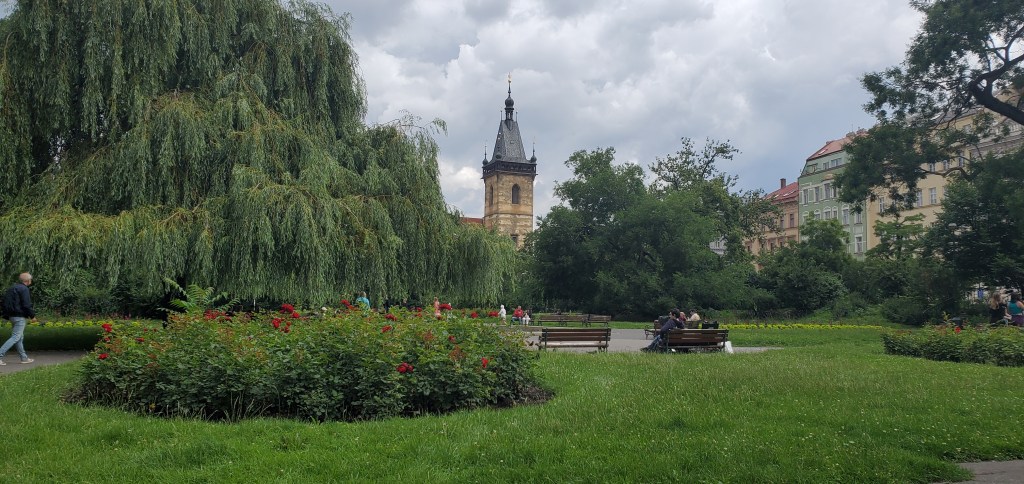
Karlovo Naměstí is a nice place to sit and read, but I didn’t have any books yet! My first stop was the Globe Bookstore. Situated in Prague’s Nové Město midway between the Vltava River and Charles Square, the Globe has a nice selection of English language books in the front of the store and a nice restaurant in the back. The whole setting makes for a lovely combination. I purchased a children’s book of Czech fairy tales, then headed out to the courtyard where I ordered a Hemingway Mojito along with fresh fruit and avocado toast. One thing I was not accustomed to was the fact that the waitstaff in Czechia doesn’t hustle you out of the restaurant to open up the table for the next customer. They have enough tables and chairs for everybody, and everybody at the Globe can read at their own pace and leave when they please.
One common theme in the fairy tales I read was that in which a Bohemian protagonist heads westward to the sea in search of salvation. So I did the same, I headed west, (well, north by northwest to be precise) to the Charles River bridge. It was mid-day on a Saturday during peak tourist season, and it was so crowded I didn’t bother taking any photos. I just huddled along over the bridge, promising myself that I would return under more suitable circumstances.
However, once I crossed the bridge into Malá Strana, something very unusual caught my eye. A groom-to-be and his bachelor buds were celebrating in the oddest way possible–by posing for selfies with a massive snake! I stopped in my tracks out of sheer survival — like Indiana Jones, I’m terrified of snakes. Absolutely terrified of them. It took me a few seconds to determine that this snake was a) real and also b) not poisonous and therefor probably harmless. I snapped one quick photo for posterity, and as I did so, the groom saw me and smiled. “Hey,” he asked. “Would you like to get your picture taken with the snake?”
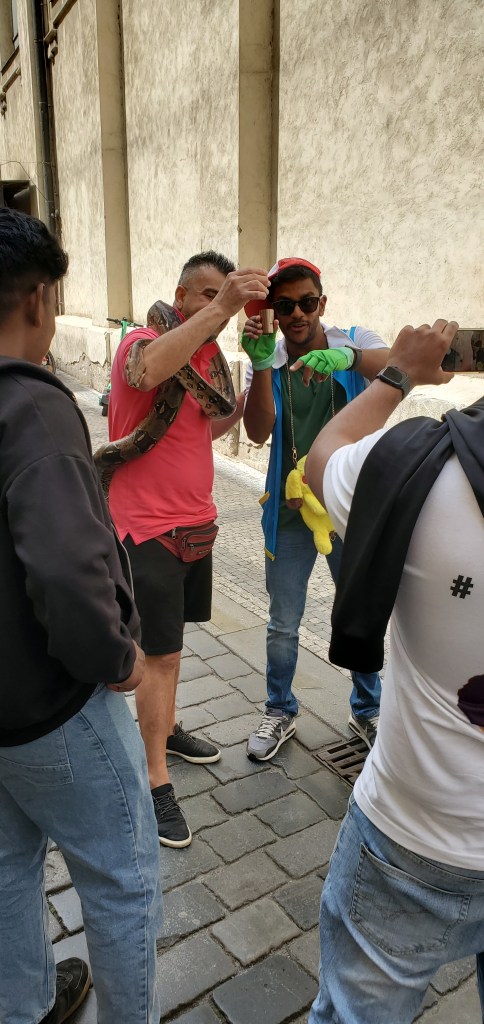
That’s one way to celebrate the end of single life 😉 “Nope,” I said with a smile. “I’m terrified of snakes. Congratulations on the wedding.
I thought that would be the strangest thing I saw all day, but alas, I was mistaken. As I walked through the streets of Malá Strana, I stumbled upon a rather interesting statue designed by David Černý. “Interesting” might be redundant when paired with Czech artist Černý, because pretty much everything this guy does is pretty provocative. “Piss,” the title of exhibition, is no exception. Unveiled in 2004, Prague passersby can can get a good glimpse of two adult males urinating onto the Czech Republic. You can even rotate the pelvis’s (pelvi?) of the statues. Why? Why not, I guess.
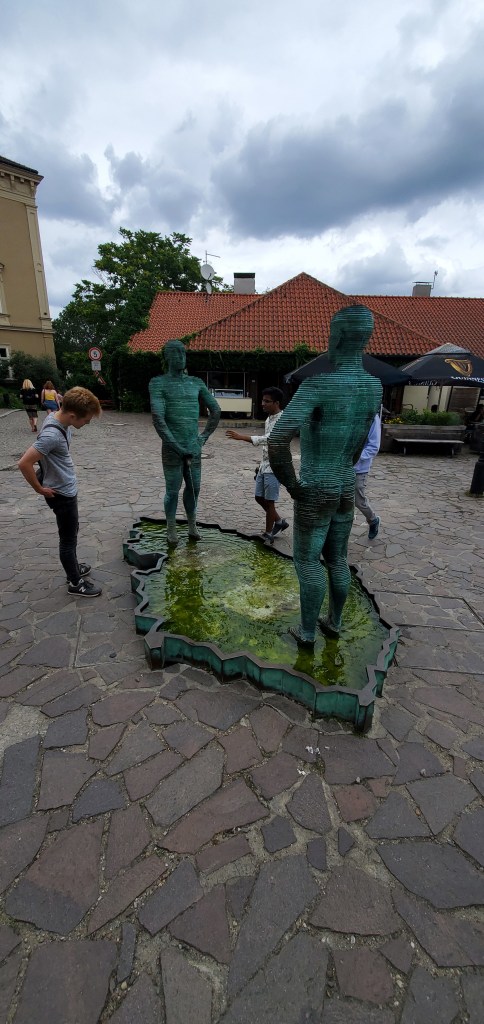
Tourists search for meaning as two statues stand in their own urine I got a good glimpse of the statues, took my turn rotating them to control their urine stream, and thought to myself, “well, this will be the strangest thing I see all day.” Searching for peace and calm, I walked to a riverbank and sat under a shade tree to take umbrage from the oppressive summer heat. A little girl was giving bread to pigeons, couples sat in the summer sun, and I thought, finally, just a normal place to relax.
Just when I thought it was safe to sit near the water, a large river rat slithered to the service. “Oh my god!” I said to myself quietly. “That’s the largest river rat I’ve ever seen.”
Well, apparently, some of fellow Vltava River relaxers had seen this particular rodent many times. A young couple approached the water’s edge, and the rat, a more specifically, a nutria, emerged from the water. The man extended his hand, offering some food to the river rodent, and the nutria got up on his hind legs.
I could not believe these people were feeding a wild animal, but alas, the creature opened its mouth, revealing its sharp, orange teeth, and feasted on whatever tasty treats this couple was offering him. My jaw dropped. I snapped some quick photos, then searched “Vltava River Rat” to try and figure out what strange animal it was that I had just seen.

Some animals just know they can get what they want be being cute. However, as I did so, rain clouds started to form, and rain started to fall. I realized I had been walking for hours, and I was starting to get hungry. I headed for the nearest tram back to my flat in Holešovice, ready to process all the strange things I had just seen, and ready for to rest up for my next adventure into the city of a thousand spires.
Tomorrow is a new day . . .
-
Midday at the Metronome
Dateline, July 8th, 2022, afternoon
File this under things that you will most likely never see in the United States of America.
After seeing such a thrilling synopsis of the Prague’s last century, I decided to take a look at some of that history in action. Specifically, I wanted to get a firsthand look at the Metronome, the avante-garde statue that Praguers erected on the very sport where a 51 foot-tall Josef Stalin once towered over the city.
Once I arrived, I was not disappointed with what I saw. More impressive than the rather large orange timepiece was the fact that everywhere within sight, local Prague people were having a very, very, good time. In fact, by American standards, it was jaw dropping.
I saw two woman sitting on a ledge uncork a bottle of wine and start sipping. Mind you, this ledge was atop a 90 foot precipice. I saw a dozen people drinking beer and sitting atop the actual ledge where the Stalin statue once stood. I saw skateboarders skating about without a care in the world.
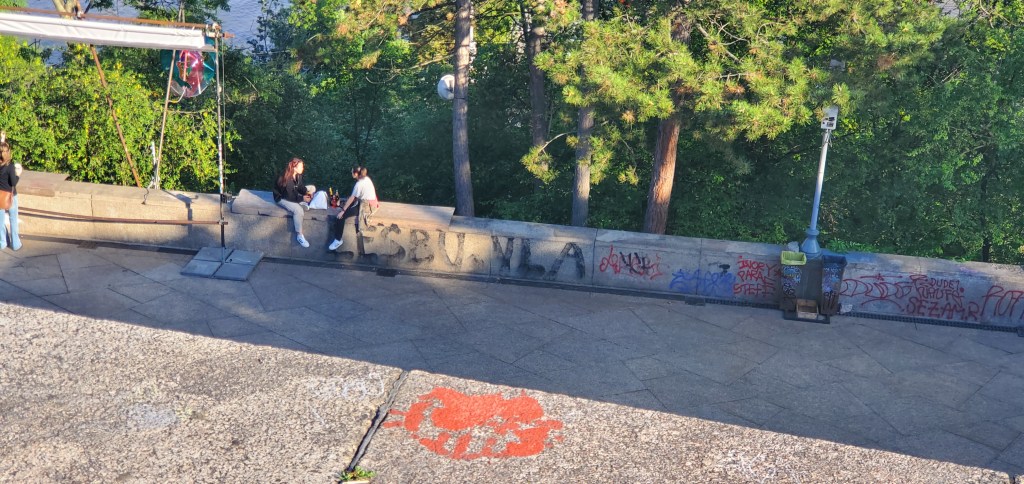
Wine not? Just another summer’s day in the shadow of the metronome. Now, close your eyes and try imagining any of this happening in the so-called “most free country on earth.”
I soaked in the views from the cityscape. Not only does the Metronome offer breathtaking views of the Vltava River and the historic center of Prague, but there is also a beer garden (of course). So I decided to act local and enjoy another fine Prague Pivo whilst I sat atop the ledge and read passages from The Unbearable Lightness of Bearing. I read about the Soviet invasion during the Prague spring of 1968, and I pictured the Soviet airplanes that were flying overhead. I could easily imagine the disruption, the chaos, and the fear that resulted when weapons of war disrupted such a place of peace and passion.
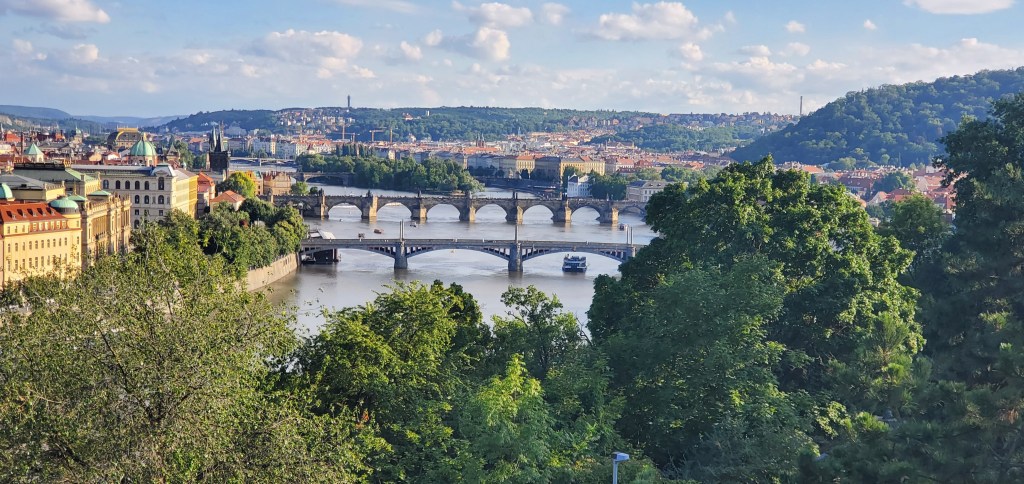
Behold the breathtaking beauty below the magnificent Metronome! With my curiosity over the Stalin monument and its subsequent removal sufficiently satiated, I walked down the winding walkway to Vltava River and crossed one of its many bridges into Nové Město. As I walked the winding streets, I stumbled upon a live music performance outside of one Prague’s many wine bars. A young man wearing Ray Bans and sporting a black look worthy of Johnny Cash sat outside the bar with an acoustic guitar in hand. He had an amplifier and speaker to provide just a little extra volume over the noise of the traffic. He was playing classic hits from the 1960s up to the present day. A small crowd of German tourists had gathered around him. The German tourists and I sang along to every song, and between songs, I asked the singer where he was from. He gave me a surprised look and responded:
“Right here in Prague.”
“Really? Your English is very good.”
“Why thank you,” he said with a smile, blushing a little bit behind his stylish sunglasses.
“Yes, really.” I added. “You speak better English than most Americans.”
With that, he chuckled and went into a stirring rendition of John Lennon’s “Stand by Me (yes, I know it was originally written and recorded by Ben E. King, but the singer sang this tune in the spirit of Lennon). As he did so, some of the German’s flashed peace signs and posted their selfie’s on social media.
The singer also had an egg-sized shaker if anyone in the audience wanted to play on percussion. It wasn’t long before I transitioned from the audience and onto the stage, helping out my newfound Czech comrade rhythm and backing vocals. We sang together until he’d reached his limit for the day, and the German tourists walked off into the evening, thanking both of us for our musical performance. I shook hands with many of them and walked away, feeling a sense of spiritual enlightenment I hadn’t felt in quite some time.
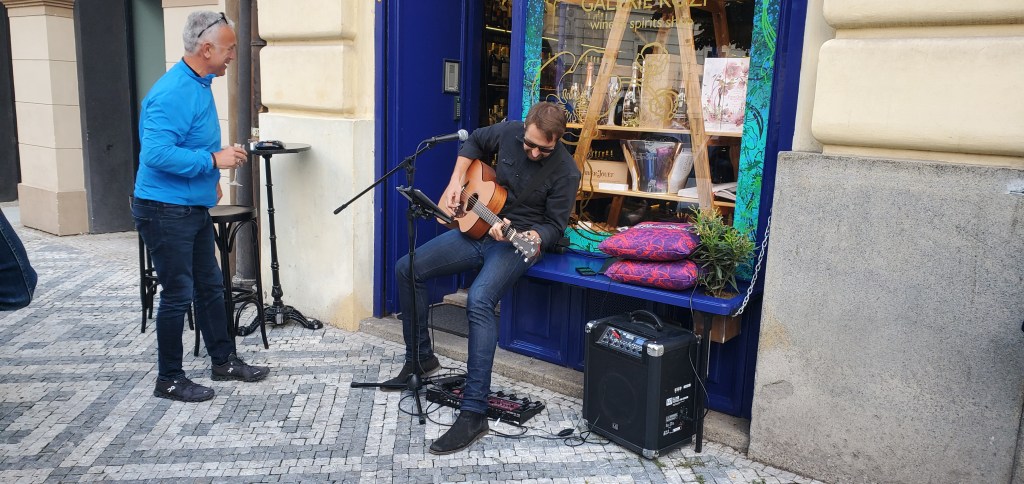
A serendipitous song and dance show in the Prague streets on a summer day And yet that wasn’t even the end of my singing for the evening. I was hungry after a long day of walking up and down all over the peaks and plummets of Prague, so I decided to replenish myself at the nearest Irish pub. Fortunately, the James Joyce was only half a block away from the wine bar. No sooner than I sat down and ordered myself an Irish cider did I find myself singing along to classic Simpson’s compositions with some of the regulars. Just a few excerpts:
“See my vest, see my vest, made from real gorilla chest.”
“Like my loafers, former gophers, it was that or skin my chauffeurs, but a greyhound fur tuxedo would be best!”
“Monorail, monorail, monorail!”
And so it continued. I chatted with some Irish patrons about the best Simpsons writer of all time (Conan O’Brien, of course), about the idiosyncrasies of the English language, and simply allowed myself to relax in a restaurant without worrying about whether or not my Czech was passable.
One week into this great experiment, and things are progressing along nicely. Dear reader, you may ask yourself, do things get better for the author as time progresses?
Spoiler alert: Yes!
-
Národní Muzeum
Dateline, July 8th, 2022
What a show!
That was the feeling I had when I walked away from the Národní Muzeum, or National Museum in Prague. A museum so magnificent that it’s architecture alone will mesmerize one’s mind. And the exhibits within stimulate the brain and stir the soul.
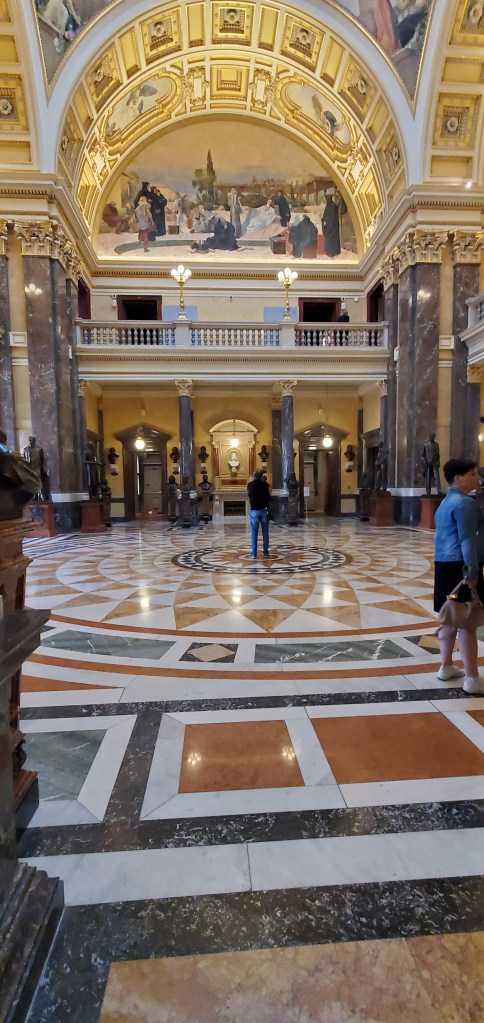
One of the museum’s many magnificent rotundas The museum is huge–so big that one could spend an entire day there. However, I only stayed long enough until my my mind’s appetite was sufficiently satiated. I didn’t want to experience cognitive overload and forget about some of the truly great things I saw this morning!
I circumnavigated the entire second floor of the main building, which covers the history of what present-day Czechia from it’s Slavic origins in the fifth century right up to the origin of Czechoslovakia’s independence in 1918. As you walk through the exhibits, you see everything, and the more you see the narrative of how this country was formed. Like a page-turning novel, there are many plot twists and tension builds. You see what others saw after the murderer of Duke Wenceslas, after the takeover of Czech lands by Austria-Hungary, and the massive buildup of industrial output and wealth inequality that precipitated World War I. As the exhibit reaches it’s close, there is a short film that briefly narrates Czechoslovakia’s involvement in that war–how they only fought because they wanted independence from Austria-Hungary (which, ironically, was exactly what the south Slavic people wanted as well). We also get a reminder that this was said to be the “war to end all wars,” and then the narrator ends not with a statement but with a question: “It was said that the 20th century would be better . . . was it?”
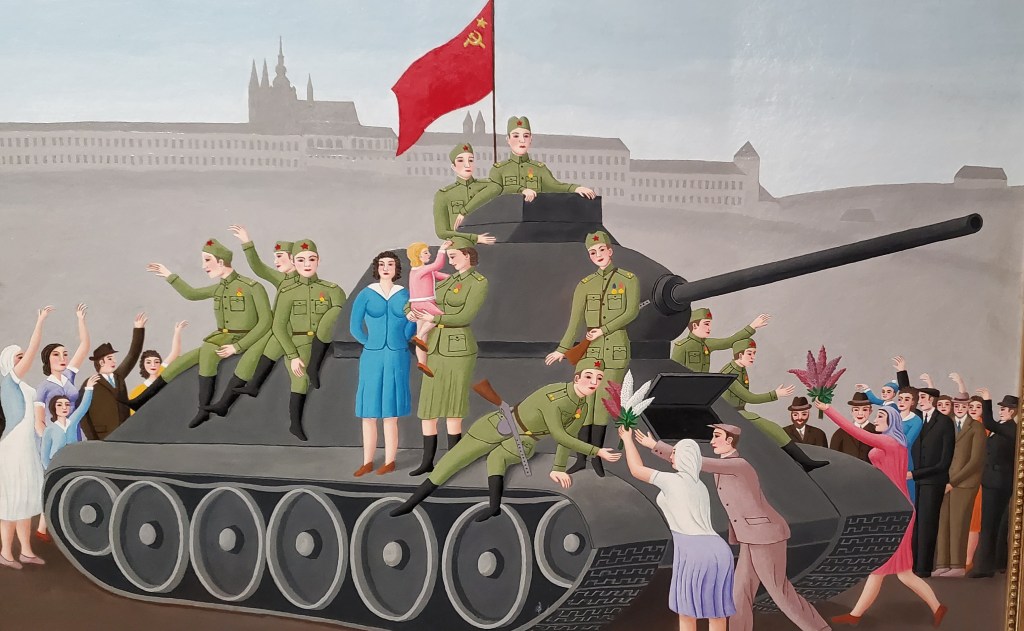
In the tradition of Soviet-mandated realism poses the question: what would happen if women served in the front lines in combat during World War II? To find out, one has to walk over to the museum’s 20th century wing–yes, and entire wing dedicated to that one century. We see some of the same themes here that are also at the museum of communism, but we see more artifacts and a wider arrange of the art and culture from 20th century Czechoslovakia. Not only that, but there is also a magnificent movie display referred to as the “Time Elevator.” Perhaps it’s a shout out to Doctor Who fans? Anyhow, viewers sit in a large, 360 degree room, sit against the round wall, and look up to a 360 degree screen. The images and the sounds do a spectacular job of evoking the thoughts and feelings of the era. You feel the fear of the Nazi invasion, of the promise and pitfall of Prague spring, right up to the current controversies of modern-day Czech politics.
After the time elevator, you can see each and every decade laid out it in painstaking detail. Perhaps most shocking of all, the fact that the author is old enough to be a museum exhibit himself. I saw a room with a CRT computer monitor, CD-Rooms, VHS Tapes, and oh my god! It’s the 90s room!
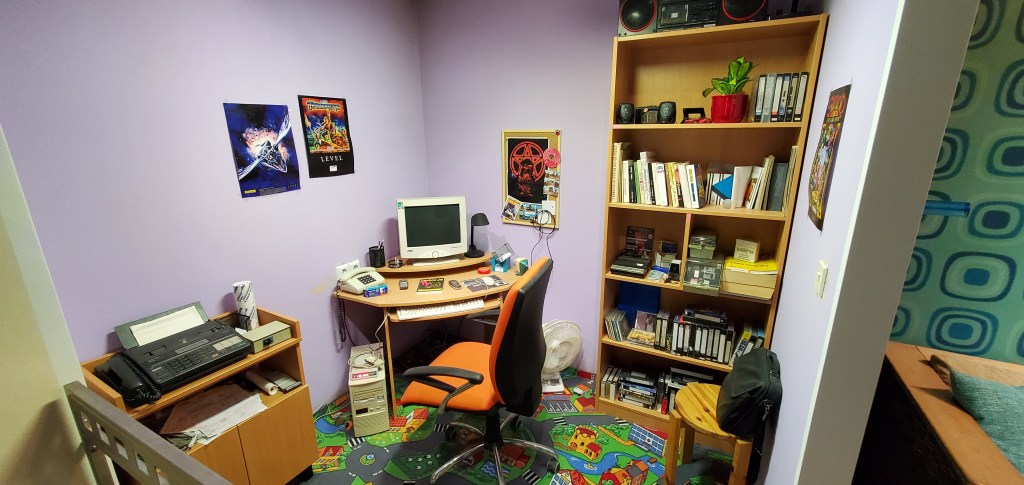
If you’re a ’90s child, this nostalgia room is for you 😉 On that note, I decided it was time to say farewell to the Národní Muzeum, but not goodbye. There is still so much left to explore, that I simply decided to save these exciting treats for another time.
With that, I stepped out of the museum and into Wenceslas Square to explore the rest of Prague, wondering what I would see and do next . . .

-
Subscribe
Subscribed
Have a WordPress.com account? Log in now.

