How can a sequel top the original?
A tall order in any situation, but in this case, our second trip to Plzeň’s liberation festival (Slavnosti svobody) occurred on the 80th anniversary of the occasion. Furthermore, I had conducted some family research in the time leading up to this year’s Slavnosti svobody. I researched my grandfather’s military history–not an easy task as he passed away about 15 years ago–and although he wasn’t part of Patton’s Army, I was able to fill some gaps from the stories that he had shared with me shortly before his passing.
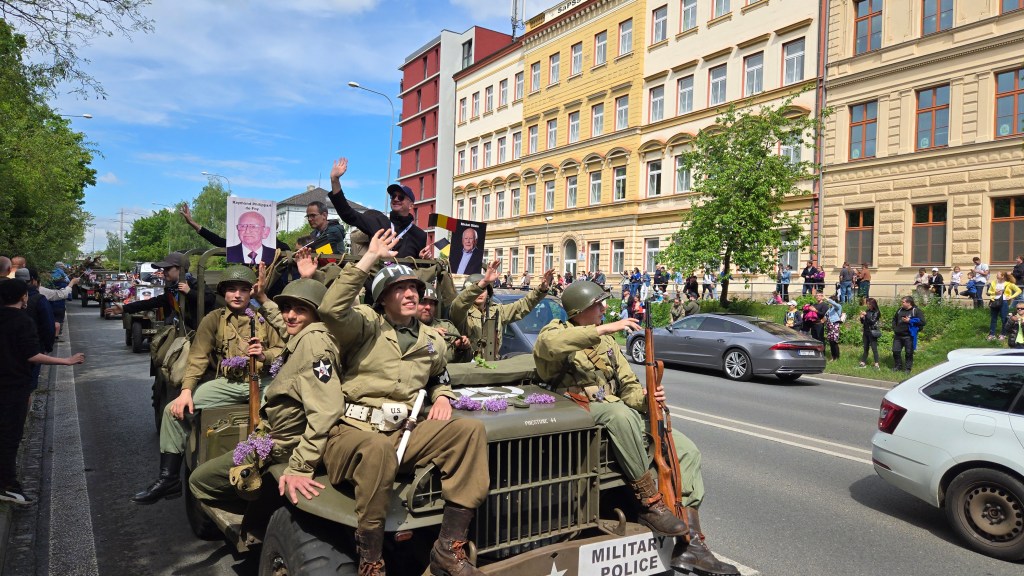
Enlightened with this new knowledge, and coupled with the fact that organizers seemed determined to make the big 8-0 the most special remembrance in the history of Liberation Day made for quite a memorable, and enjoyable experience.
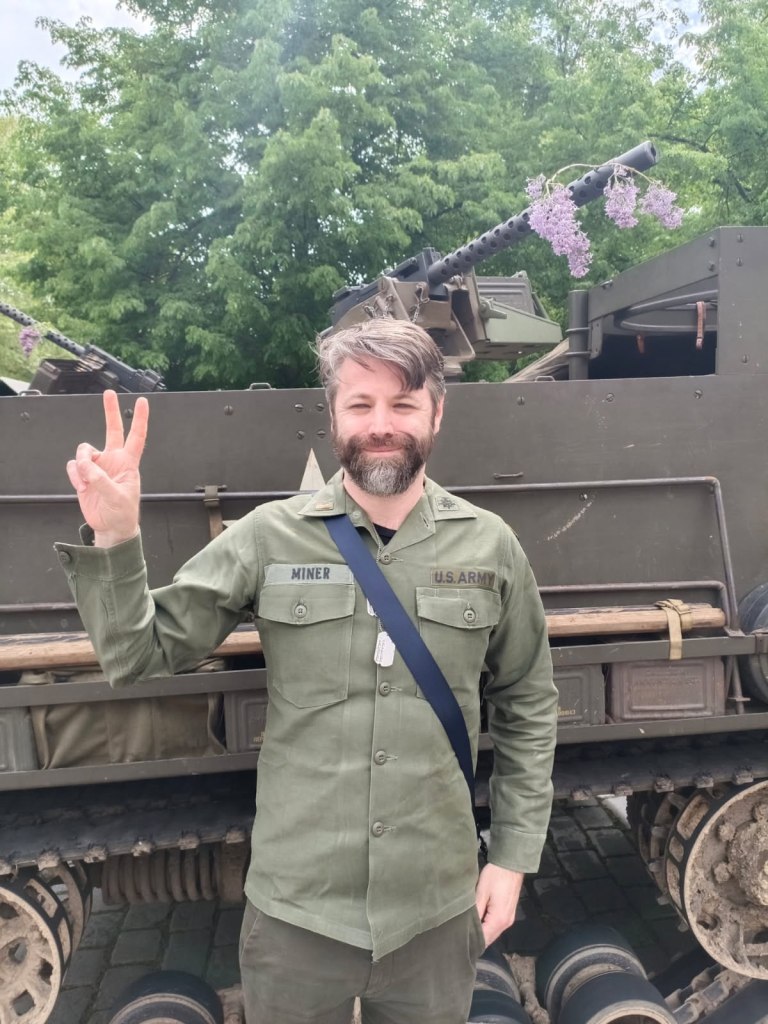
Oh yeah, and my father passed away on the ides of March this year. For him, I wore his officer’s dress shirt that day.
Petra and I left Prague early in the morning, as we wanted to ensure a good place to view the parade. We saw that the organizers had planned a different route, so we left the Plzeň’s Náměstí Republiky (Republic Square) to the city’s main thoroughfare, Sady Pětatřicátníků, just two blocks to the west. However, as soon we arrived, we saw that the entire four-lane boulevard was jam packed with other visitors. We checked the map again and thought we might get a better view further down along the root.
With this in mind, we turned north for a few hundred meters and then east, finally settling at the intersection of Veleslavinova and Rooseveltova streets. At least we thought we had finally settled. It was only a few minutes before the official start of the parade, and we were the only two people standing at the intersection. We asked a local police officer if we were indeed standing alongside the parade route. He informed us that while yes, this was technically part of the parade route, this wouldn’t be a particularly good place to watch from because the tanks were too large to travel this route!
Oh boy! So we walked north, down the hill, and finally settled near an underpass on Tyršova–another four-lane boulevard that runs east-west near the center of Plzeň. After so much frantic scurrying from place to place, it subsequently felt like an eternity before the parade ever reached us (in reality, is was only fifteen minutes). Nevertheless, it was the worth the wait!
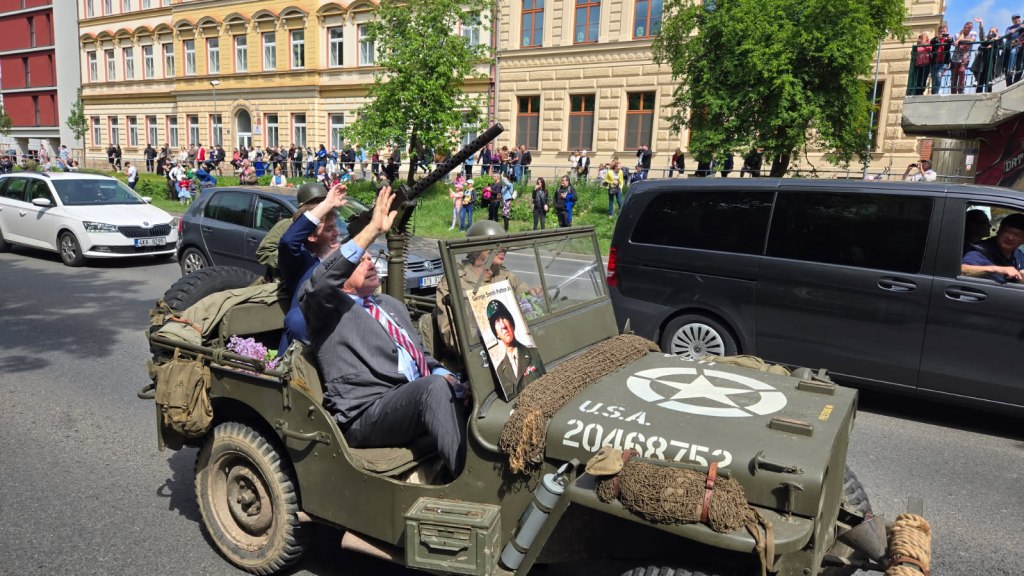
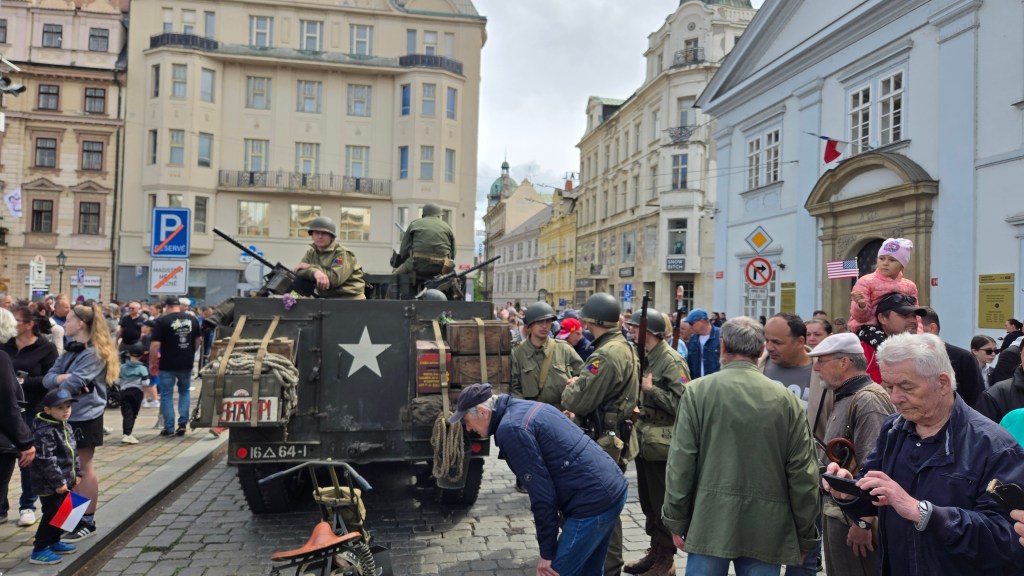
George Patton’s Grandson and Great-Grandson led off the convoy, followed by the descendants of other officers and soldiers from Liberation Day. Not just Americans, but Belgians, Australians, and even some of the brave Czech resistance fighters were there with enthusiasm.
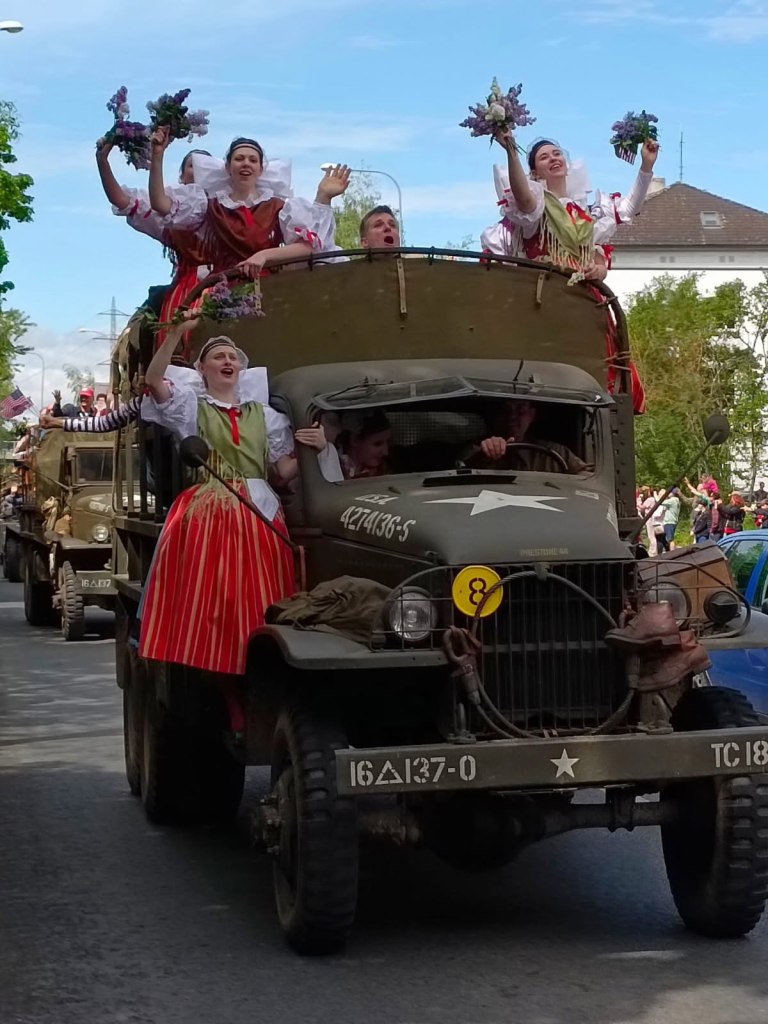
Maybe it was just me, but the overall vibe felt a little more festive, and a little more reflective. The parade itself was larger, the crowd was larger, and there were more supplementary activities before and after the parade to soak in the history. And of course, there were the tanks. Massive, massive authentic WWII US Army tanks.
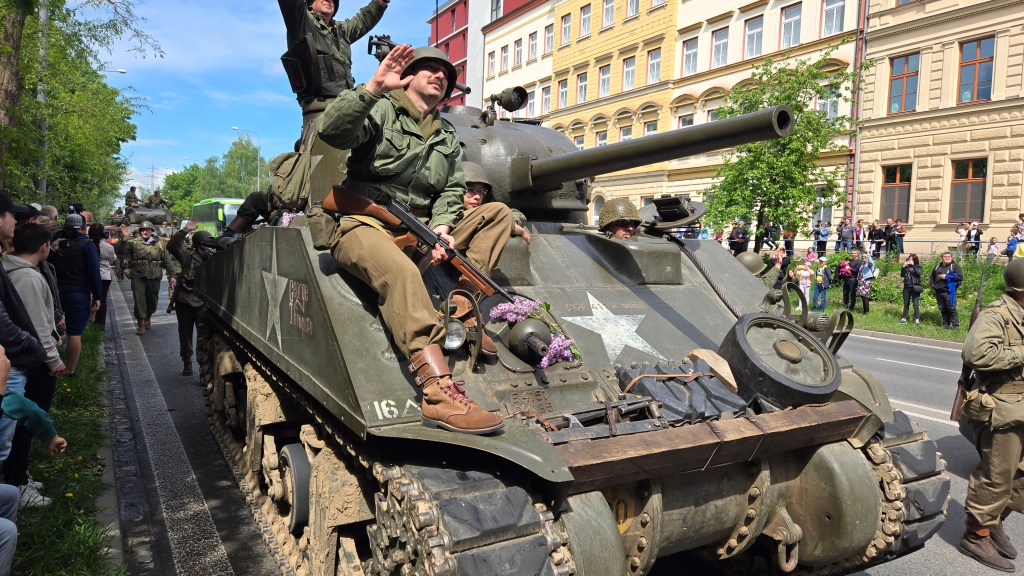
As we watched, some of the parade participants paid particularly close attention to my father’s uniform. Some saluted, some gave me a high-five. All of them smiled and waved. Those salutes are for you, Dad.
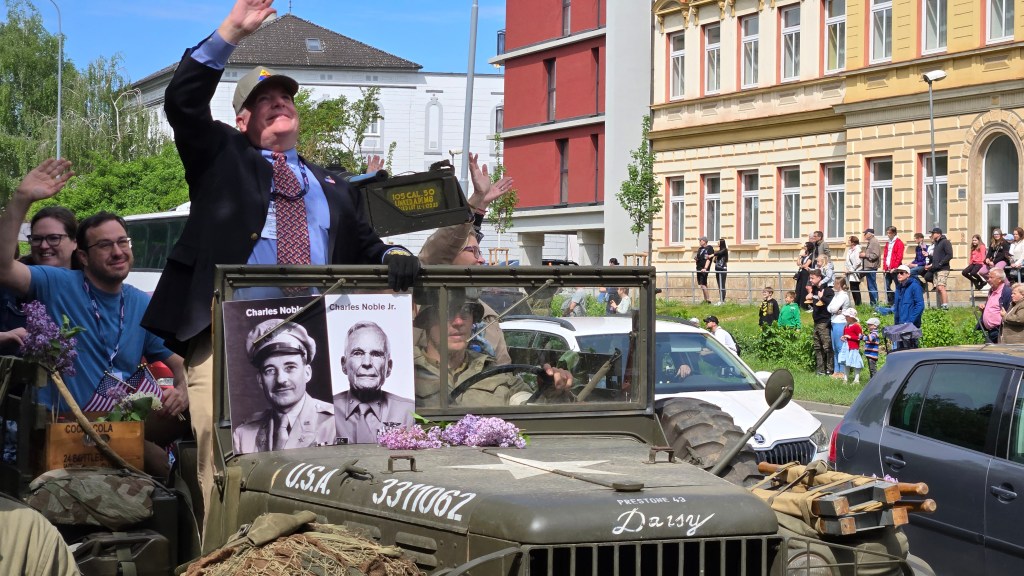
After the last of the parade convoy had departed, Petra and I headed back to Republic Square. As we were walking, we ended up joining with part of actual parade, as we were right back at the intersection of Veleslavinova and Rooseveltova. A few people saw my father’s uniform and thought I was part of the parade and took my photo. To be fair, I was wearing my grandfather’s dogtags. Speaking of my grandfather, here’s what I learned about John J. Donohue’s service during World War II.
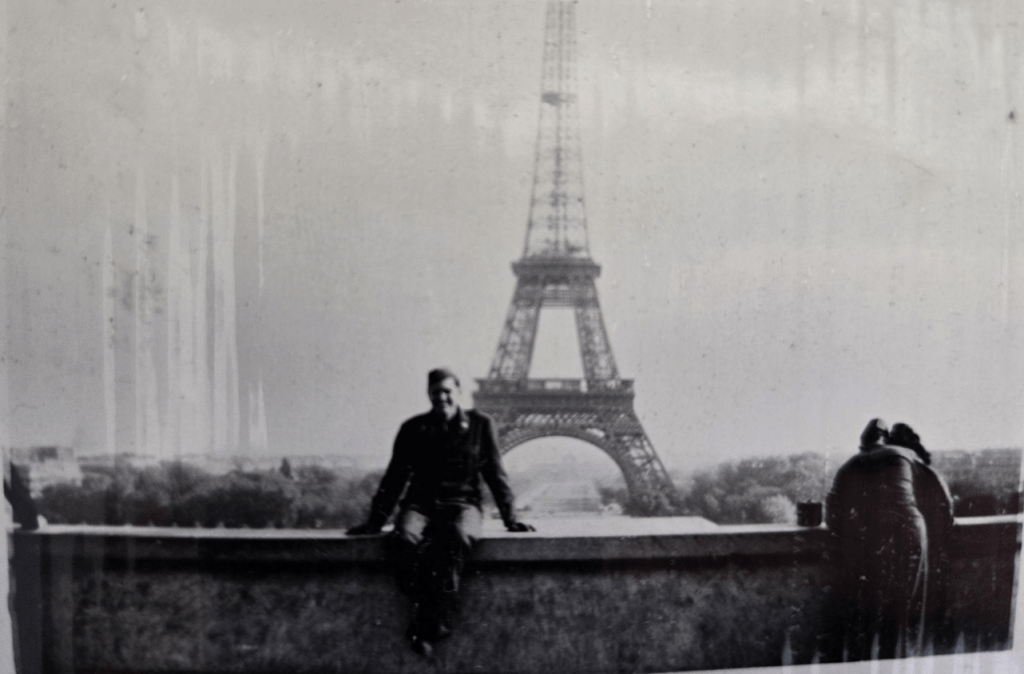
In the summer of 2008, about a year and half before he succumbed to father time, I finally asked my grandfather, “What exactly did you do in World War II?”
“Well . . .” he said, with a moment of hesitation, “I enlisted on December 8th, 1941.” He then went on to describe his time at the harbor defense of Monterey Bay California, his anticipated deployment to Anzio, his actual deployment to Normandy (“I was on a boat on June 6th, we didn’t land on the beech until the following day), his participation in the Battle of the Bulge, the difficulty in the crossing of the Rhine River, and finally, his near court-martial on 2nd of May, 1945, for going to a local dance hall and dancing the night away with the local German women. The charge was fraternization with the enemy. His defense, “everyone else was doing it!” won him reprieve from his commanding officer. As it was, the town of Germany they were in surrendered a few hours after the dance party was over, and all was forgiven.
Still, I wondered, where was he two days later? Did he and his men keep marching on to Plzeň? The photo I found in the family archives put that question to rest. General Patton commanded the US 5th Army, and it was men under his command that officially liberated Plzeň. Sargent Donohue was in the 4th Army, commanded by General Raymond “Tubby” Barton, which landed on Utah Beech on June 6th and liberated Paris August 25th. In the final days of the war, they were in southern Bavaria. The troop movements of the US 4th Army during WWII align with my grandfather’s story exactly.
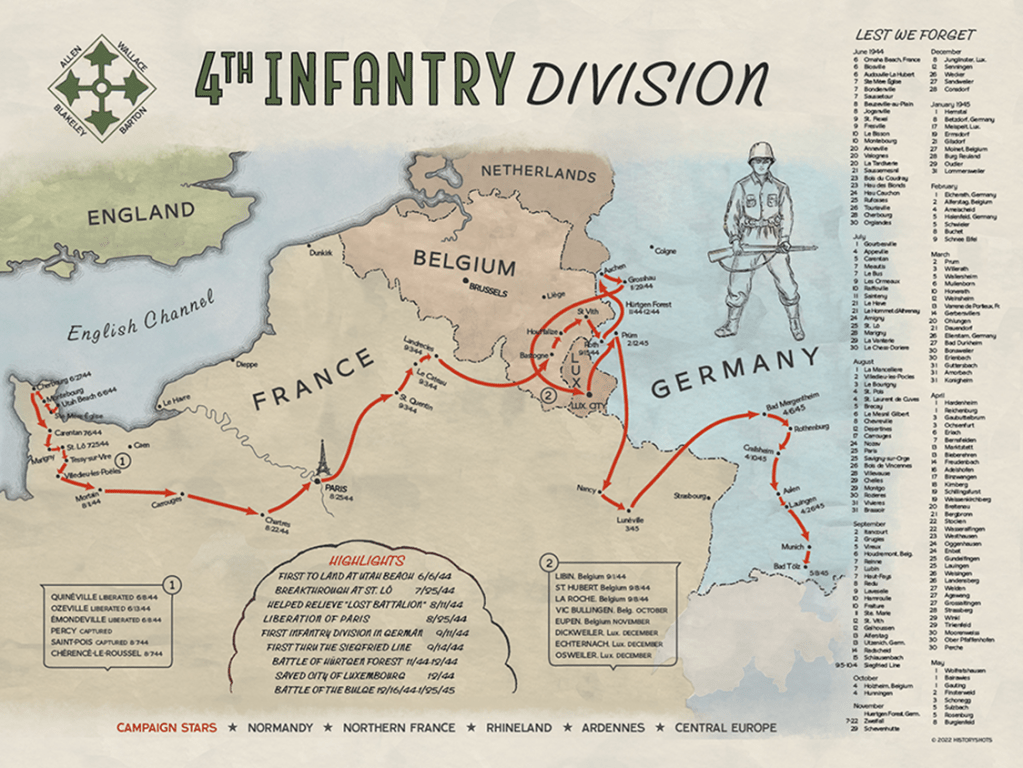
Since four isn’t five, it’s impossible for him to have been in Plzeň on May 6th, 1945. But as grandpa liked to say, “who’s counting?” So yeah, Grandpa, those photos are for you.
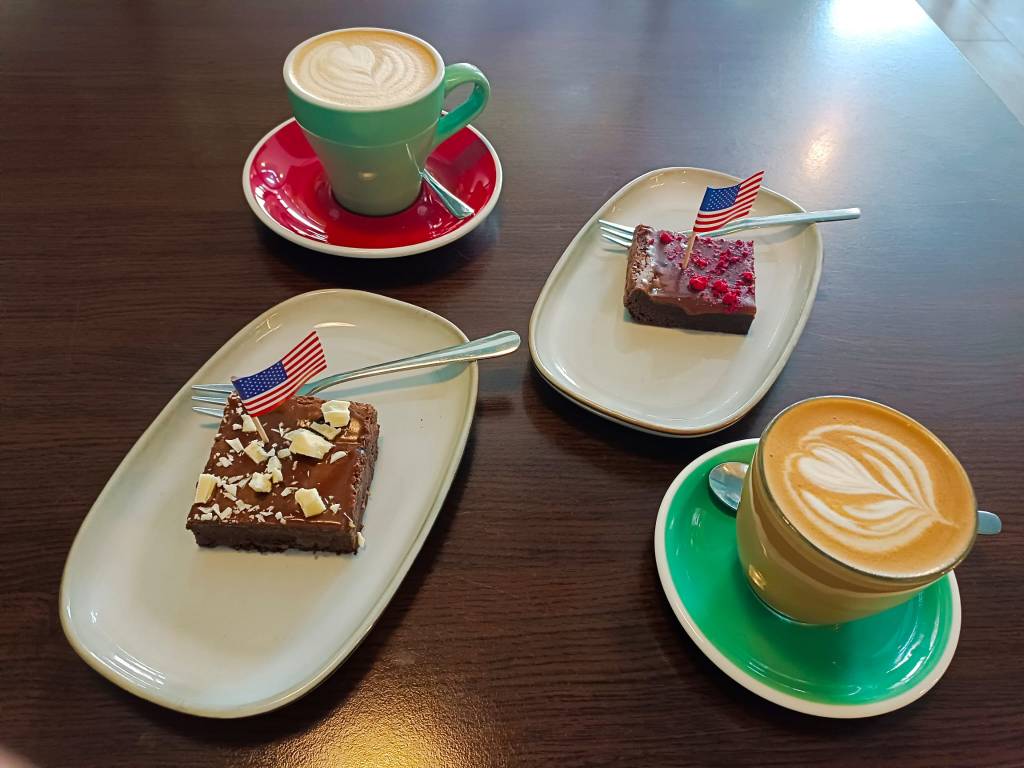
After the parade, we stayed for another few hours, visited some of the exhibitions, watched a concert where people sang Bob Dylan’s “Love Minus Zero No Limit” in Czech, and finally enjoyed a tasty treat with cappuccino before heading back to Prague. This closed another fascinating chapter in the land of King Wenceslas.
As for next year, who knows? Maybe we will be in Paris 😉
 A Connecticut Yankee in King Wenceslas's Court
Leave a comment