Dateline: 5 May, 2024
What an event. What an experience. What a day.
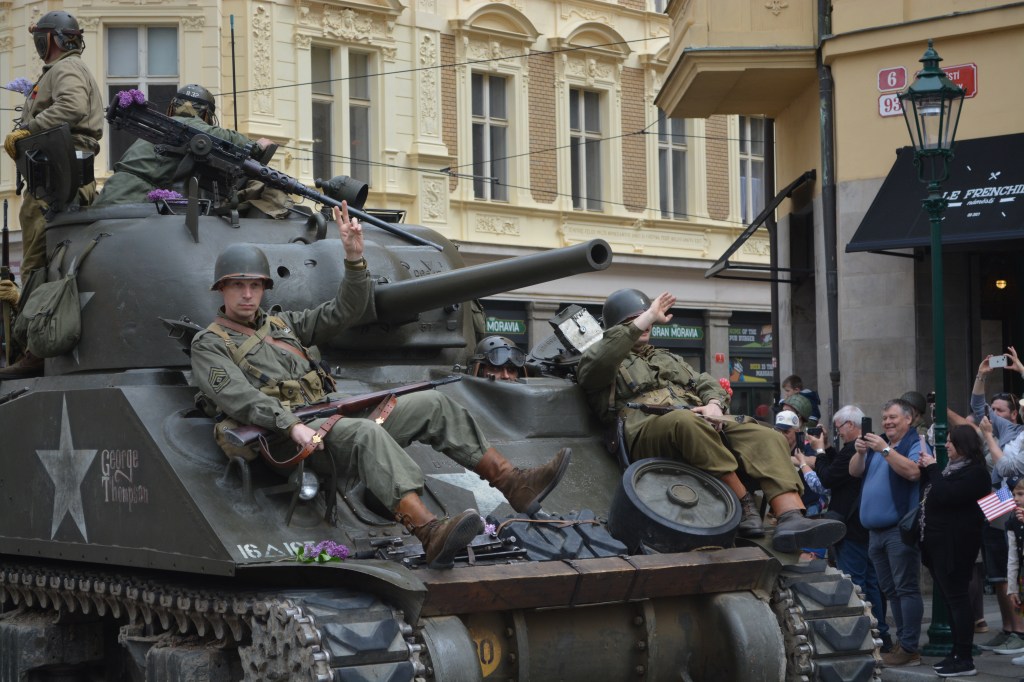
An authentic WWII US Army tank leads the way through PIlsen’s Republic Square, to the delight of joyous onlookers
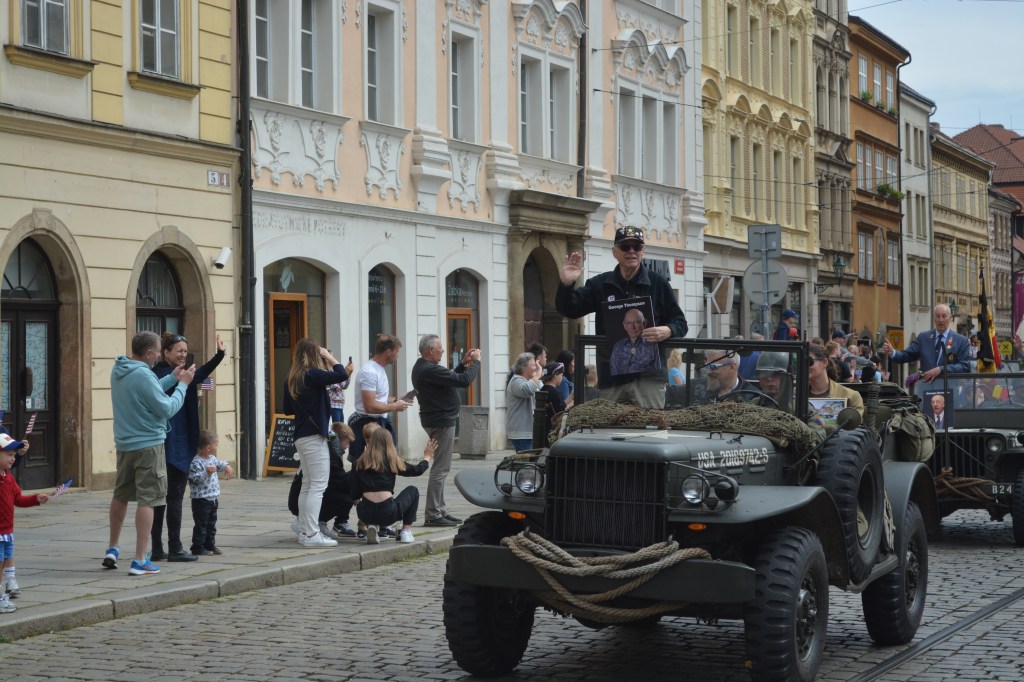
The 8th of May is a national holiday in the Czech Republic, as that was the day that Germany officially surrendered to the Allied Forces, effectively ending World War II in Europe. However, residents of Pilsen celebrate with grandeur on the 6th of May, with WWII re-enactors as well as descendants of Allied veterans, who drive authentic WWII era vehicles through the center of PIlsen. People also celebrate with music, speeches, and copious consumption of one of their favorite American imports: ice cream. It’s a big deal.
You might wonder, why Pilsen? And why two days early? It’s a good question, and the answer illustrates one of the few hidden chapters of World War II.
Those who know their World War II history know that Czechoslovakia was on the other side of the Iron Curtain, and its true that most of the country was “liberated” by the Soviet Union. However, people often forget that Prague, the capital of this Slavic nation, is actually west of Vienna. And even those who know the name of legendary General George S. Patton are unaware that he actually advanced his forces clear past Germany and into Western Bohemia.
Here’s a little background: The City of Pilsen, better known among Americans for the beer which bears its name, is located in Western Bohemia, midway between the German border and the capital city of Prague. During World War II, it was home to a major weapons factory. It was vital to the Nazi war effort, as Bohemia was out of range from Allied Bombers–at least until the 25th of April, 1945. That day, American B-17 liberators bombed the factory into oblivion. The following day, P-51 mustangs with their massive .50 caliber mounted machine guns mangled the railways beyond function. Thus, the occupying German force had no means of reinforcements, and were effectively trapped. Patton pounced, and after nearly two weeks of heavy fighting, the Nazi-appointed mayor of Pilsen surrendered the city, and Pilsen residents were able to celebrate their freedom two days before the rest of Czechoslovakia.
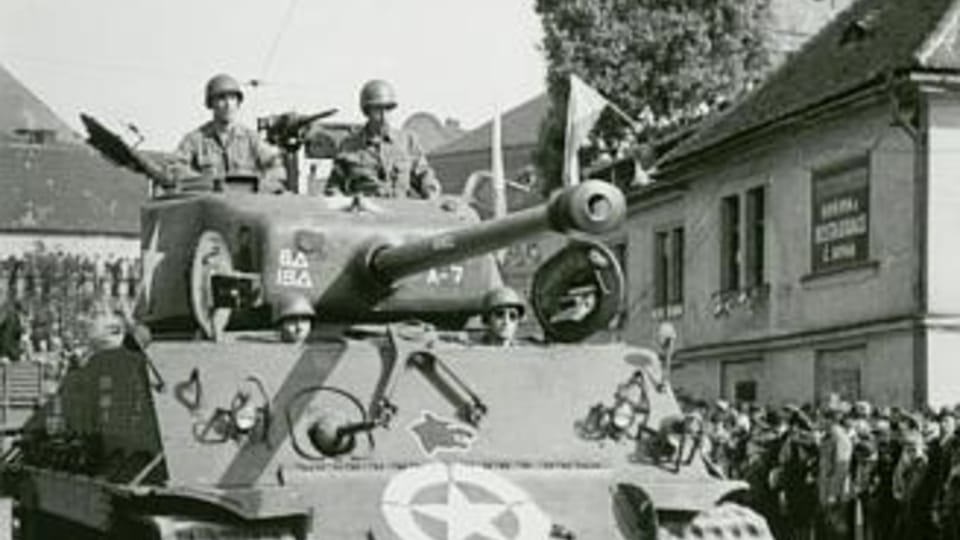
Soldiers from General Patton’s 5th US Army Brigade greet the crowd on their liberation ride through Pilsen, 6 May 1945
Patton didn’t want to stop there, and formally requested permission from Dwight Eisenhower to advance all the way to Prague. Eisenhower, ever the diplomat, declined. “I will not an endorse a strategy that is militarily unwise to gain a political advantage,” wrote Eisenhower to Patton. Even as Eisenhower wrote the letter, Prague resistance fighters attempted to liberate the city on their own the following day, to no success. The day after that was V-E Day, and Soviet tanks rolled into Prague unopposed, as Germany had already surrendered.
Unbeknownst to Patton, Eisenhower’s decision came from above. Months prior to V-E Day, and even before the Yalta Conference, Winston Churchill and Josef Stalin reached the “percentages agreement,” by which the Soviet Union would occupy all the Slavic nations as well as East Germany, while the British and the Americans would be tasked with the occupation of rest of formerly Nazi-occupied Europe. The people of Czechoslavkia , Pilsen in particular, were pawns in this game, and although American forces initially worked to rebuild the damage that they had incurred in Pilsen, they left a few months later.
This ended a chapter that the opposing sides of the Cold War consciously chose to forget. Josef Stalin wanted to be seen as a “hero” to the Slavic people, and any mention of America’s role in the liberation of Western Bohemia was deliberately omitted from “official history.” Winston Churchill was obsessed with blaming Stalin for the creation of the “Iron Curtain” that he himself helped design, and Americans would rather not remember how little leverage they had in crafting postwar Europe, nor would they like to remember any fissures between Roosevelt and Churchill. And so for nearly half a century, this little chapter in World War II history was simply overlooked.
But the people of Pillsen never forgot. And as soon as the Iron Curtain finally fell, residents of Pilsen commenced what has become an annual tradition: Liberation Festival. From Friday, 3 May to Monday 6 May, celebration is a mix of the somber and the euphoric. 79 years after the actual Liberation Day, few people are alive to remember the original, but their children and grandchildren come to reflect and remember. And as the grandson of World War II Veteran who witnessed the parade on Sunday, I have to say it is a very moving experience.
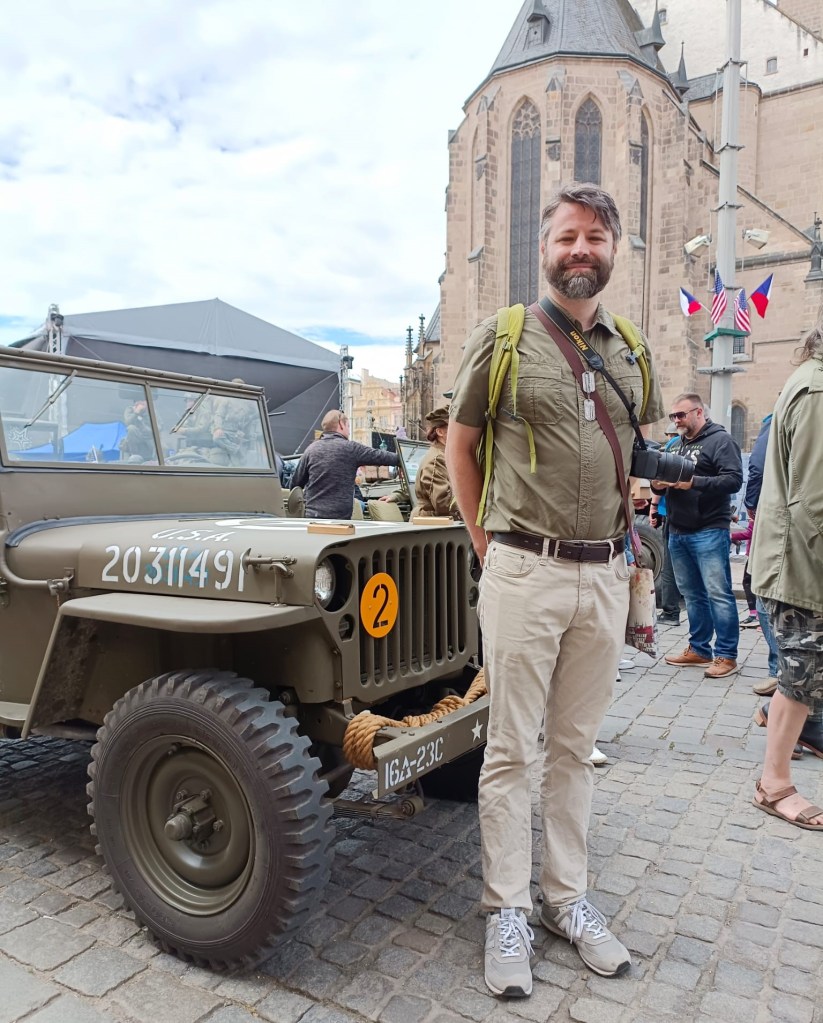
I wore my grandfather’s dogtags and traveled to Pilsen with Petra, We enjoyed some American style grilled sandwiches and lemonade before the parade, then stood and cheered with everyone else in attendance for the big show.
Mere words will never be enough to sum up the magnitude of gratitude for this experience
Having grown up in a country that prides itself in high standards, then seeing said country repeatedly fail to live up to such standards can be rather depressing. Hell, just a read any book by WWII Kurt Vonnegut and you’ll understand. But the way that the descendants of this historical event keep this memory alive, as well as the gratitude shown by the people of Pilsen is something that simply quite uplifting.
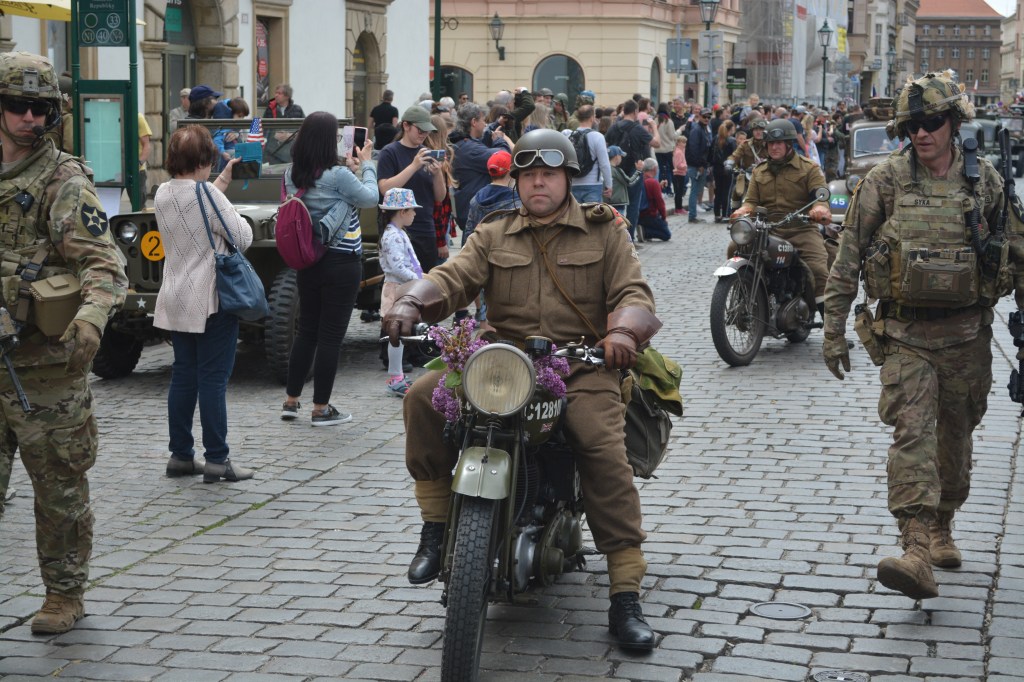
The old and the new: Czech soldiers equipped with their modern uniforms can’t help but admire the classic look
The parade was a sight to see, to put it mildly. I snapped more than my share of photos, and clapped especially hard for the descendants of the veterans who traveled halfway around the world for this little celebration. And when the parade was over, I even had a chance to experience some of the hardware first hand. Yes, for the low price of only 200 Czech Koruna one could sit in the actual cockpit of an exact replica of British Spitfire.
“Are you sure you want to do this?” asked Petra. “200 Crowns is a lot of money for such an experience.”
“True, but I’m an American, we love this gimmicky stuff,” I replied enthusiastically. “Besides, it’s only about 8 dollars!” I invited Petra to sit in the take a chance in the cockpit, but she declined anyway. Although she got quite a kick out of seeing me get ready to take off and do a celebratory city flyover.
Actually, it’s closer $8.50, but as my grandfather liked to say, “who’s counting?” The experience was quite valuable. Once I sat in the cockpit, I felt that flying in such a plane over the English Channel, even without dodging enemy fire, would basically be suicide. Nothing makes you feel more respect for the R.A.F. than feeling the flight controls and seeing the spartan instrumentation panel of this winged weaponry.
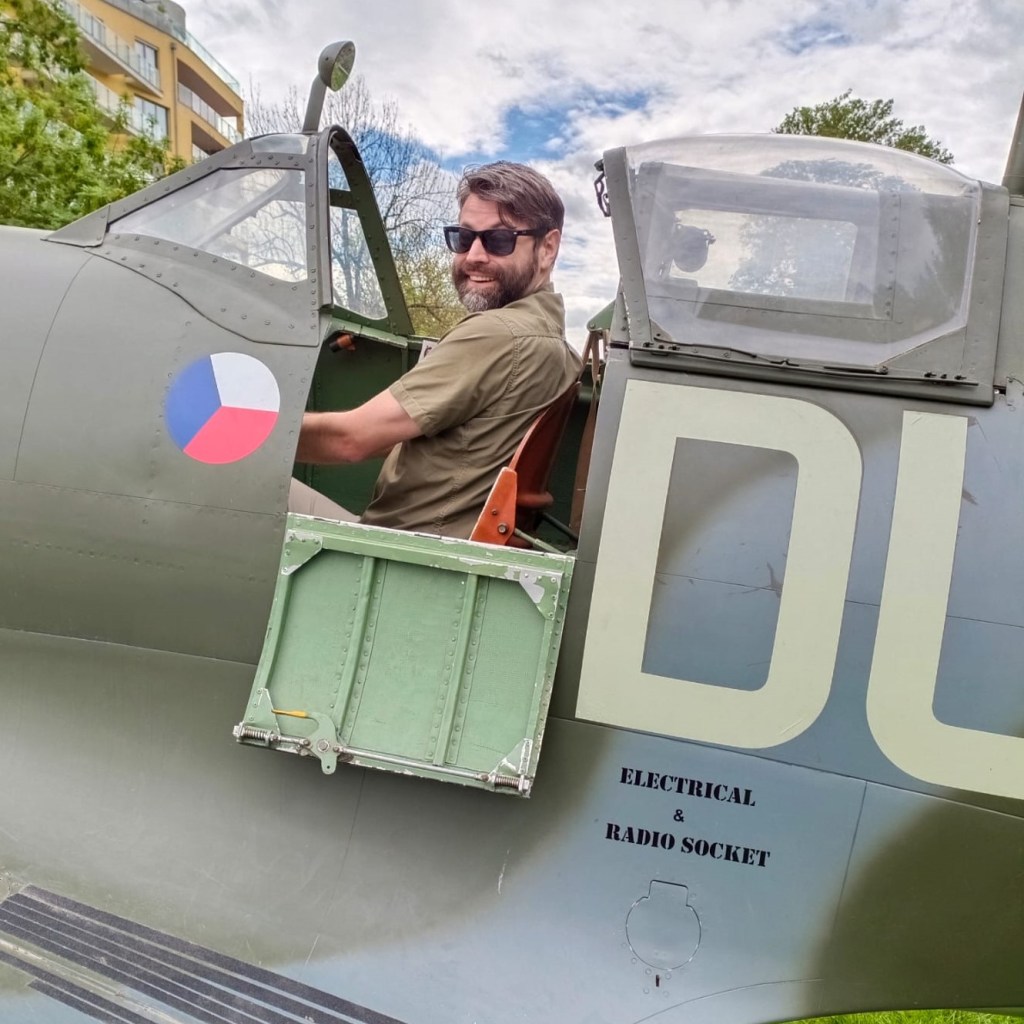
Are you ready to fly over the English channel in this one-man fighter plane? Yeah, me neither.
After my moment in the pilot’s seat, Petra decided to indulge in another way to celebrate America’s liberation of Pilsen: ice cream! We looked at some other exhibits, saw some celebratory musical performances, and then finally made our way to George S. Patton museum to get as much historical context as possible.
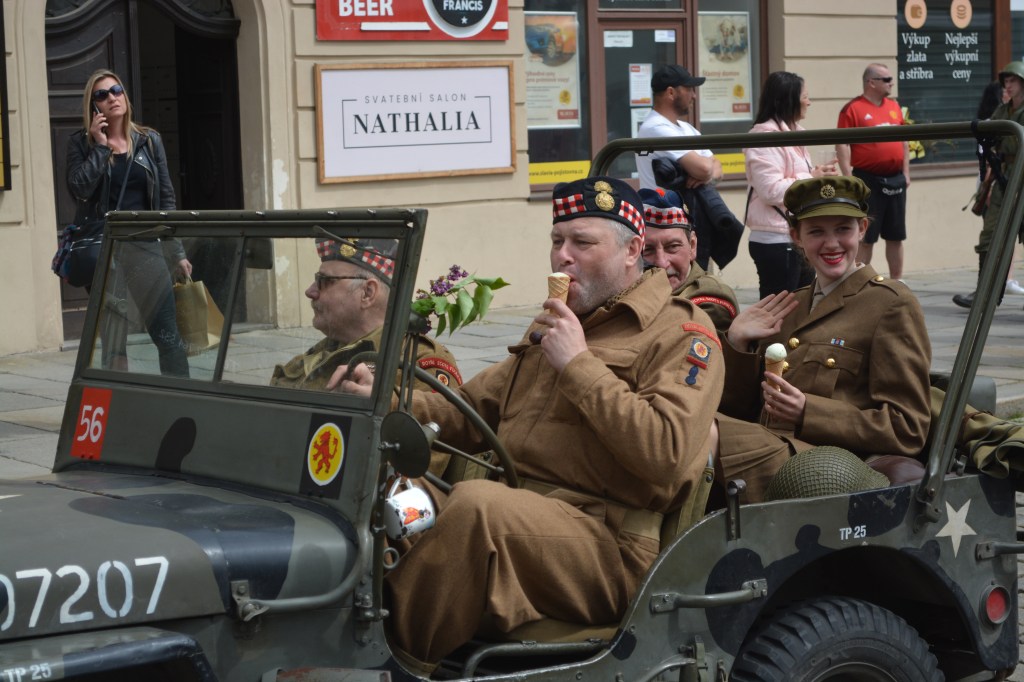
I scream, you scream. We all scream for ice cream!
By late afternoon, it was time to head back Prague. As we were leaving, it was if we got to the see the parade all over again. Obviously, we weren’t the only one’s leaving town.
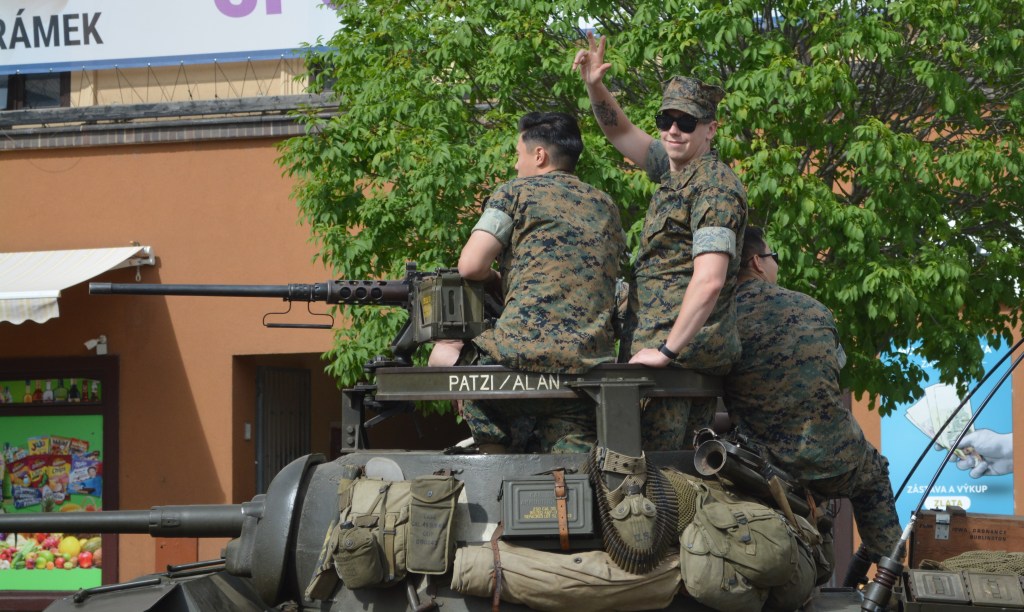
Ahoj!
And with that, we waved our final goodbye–or was it hello? After all, “Ahoj,” like Aloha, means both hello and goodbye. And we will certainly return to Pilsen for the 80th Anniversary of Liberation Day next year.
 A Connecticut Yankee in King Wenceslas's Court
Leave a comment