Dateline: July 15, 2022
What better time than to write about my first trip to Prague castle than after the disappointing box office debut of Indiana Jones and the diaper of dysentery?
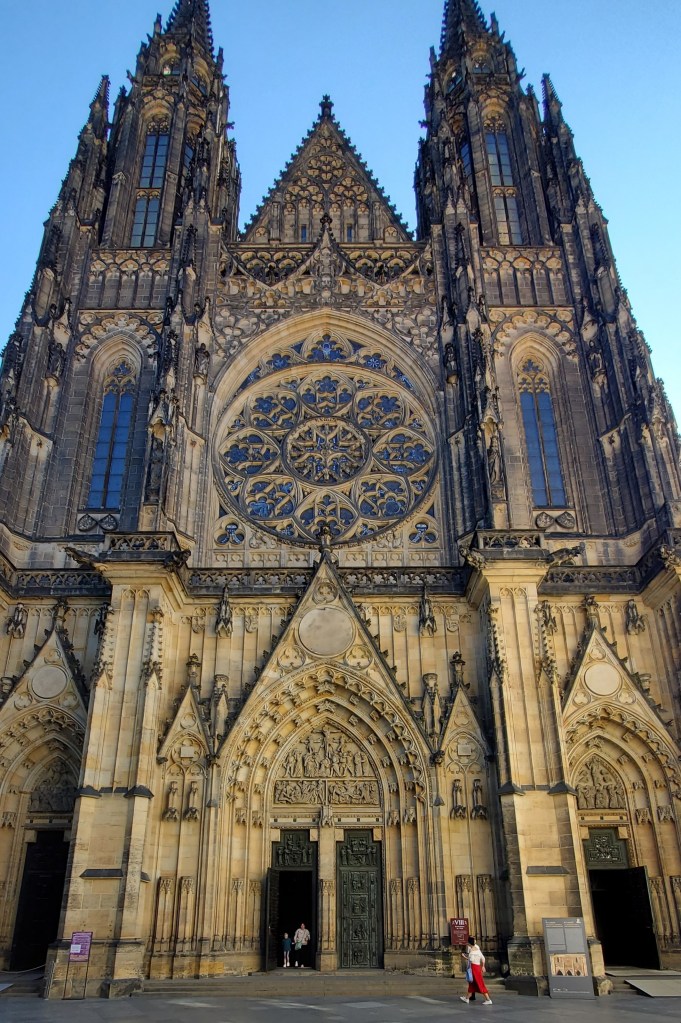
Prague castle is situated just below the crest of a hill and overlooks the historic neighborhoods of Staré Město and Malá Straná. Conversely, those in the aforementioned neighborhoods on the banks of the Vltava River stare up in awe of the castle that perpetually gazes down upon them. I arrived early in the morning–so early that the ticket office wasn’t even open yet. It was 8:45 AM, and the hordes of tourists had yet to clog castle complex. The castle grounds are open to the public at 6, while the historical buildings don’t open until 9. And although the grounds of Prague Castle are free, its most prominent attractions–such as the cathedral and the bell tower–require a ticket prior to entry. I enjoyed a few luxurious moments of near-solitude as I casually strolled across the castle’s main square, and as soon as the ticket office opened, I made like a bee line to the front desk to purchase my ticket.
Visitors have the option of purchasing tickets for individual buildings, or what they the “circuit ticket.” The per unit price is lower, and it gives the visitor a chance to visit all that Prague Castle has to over: St. Vitus Cathedral, Old Royal Palace, St. George’s Basilica, the bell tower, and Zlata Ulice. I opted for the value pack and saw that my ticket was marked with Roman numerals, each of which corresponded to a historical building within the castle. In my excitement, I opted not to take a complimentary map and instead explore the sights on my own terms. Prague Castle, here we go!
Roman Numeral I is the easiest to find. As soon as you exit the ticket office, you walked from the auxiliary square into the main square of the complex, and a massive cathedral greats stares you down as you gaze up in awe. Although construction of St. Vitus Cathedral commenced in 1344, it was not completed until 1929. Yes, it is a structure six centuries in the making. After I admired its splendor in the morning light, I took a deep breath and walked through its majestic doors.
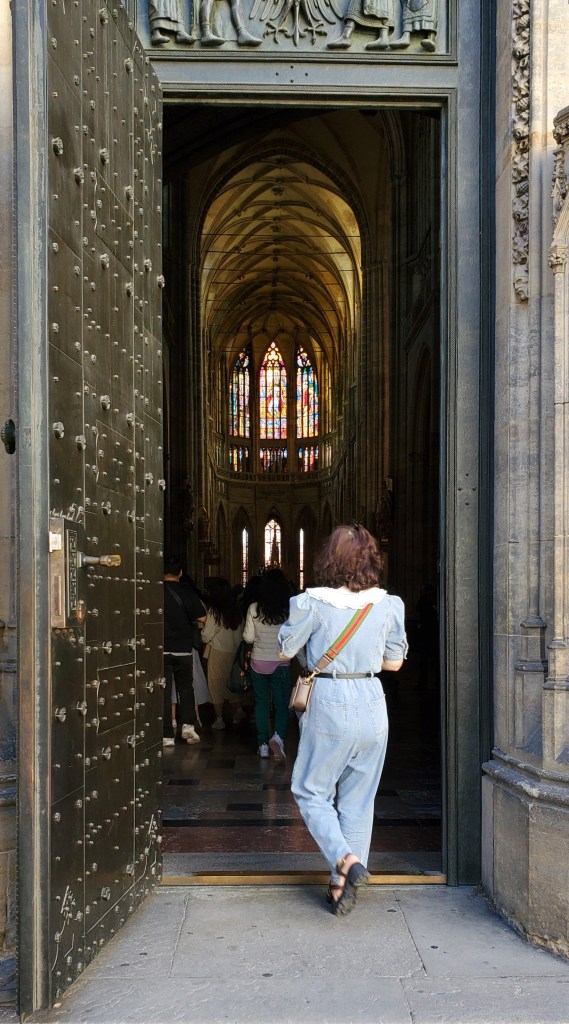
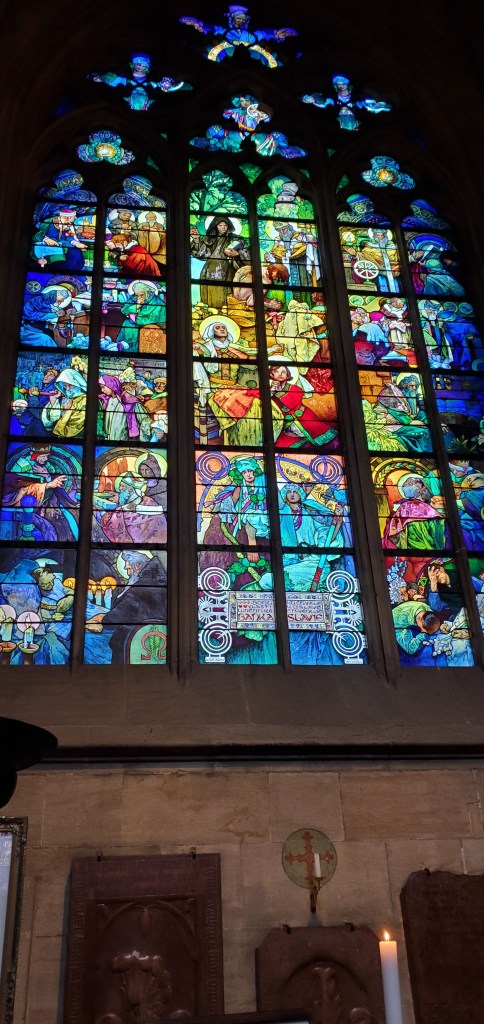
Once inside, the morning sunlight illuminates the stained glass windows within. Perhaps the hunchback of Notre Dame could have visited this Cathedral, as its splendid artwork forces one to look up and admire its sheer beauty. If you’ve got bad posture, St. Vitus Cathedral is a must visit.
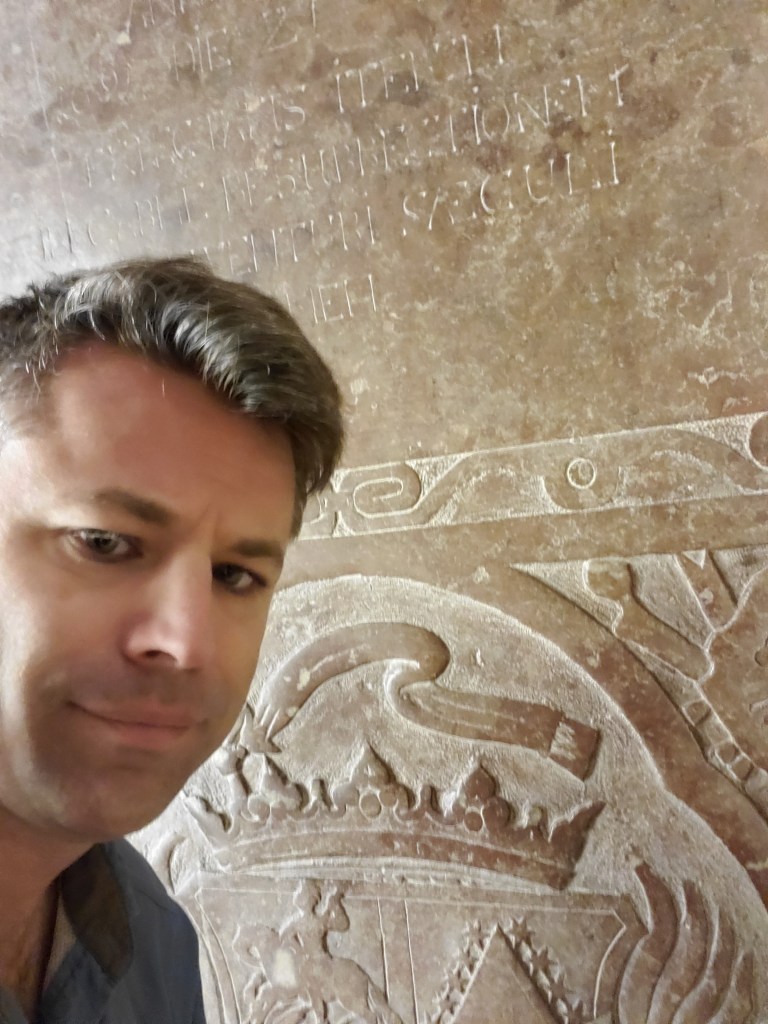
I circumnavigated the cathedral from front to back, and took time to visit its multitude of auxiliary rooms as well. All the while, I kept an eye out for Roman Numeral X: the bell tower. Seeing none, I exited the Cathedral and walked onward, past the fountain in the main square, and towards the lesser sized of the two religious buildings, the Basilica of St. George. Constructed in 920 AD, it is the oldest edifice in Prague Castle, and a sense of the ancient permeates the air within its very walls. There is a visceral sense of the many people who lived here and died here, and you are humbled in the knowledge that you to are just a passing visitor through time and space. In a moment of thoughtful contemplation, I placed my hand on one of the walls, and thought of the artisans who constructed these walls almost two thousand years ago.
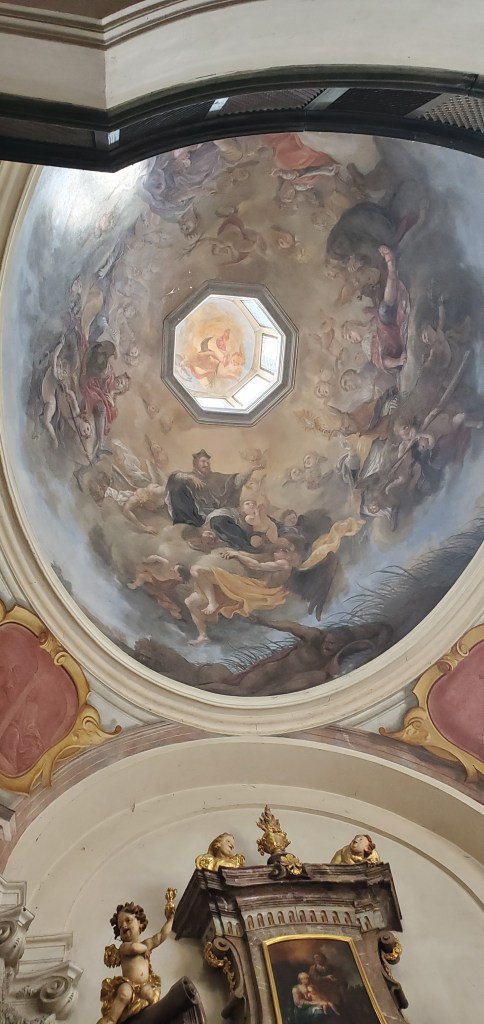
It’s not all a drab, dark interior, either. Look up, and you are treated to quite a sight.
Hardly satiated, my quest for history was a hunger that was only heightened as I walked back outside. I searched further for Roman Numeral X, and instead saw a sign for Zlatá ulička.
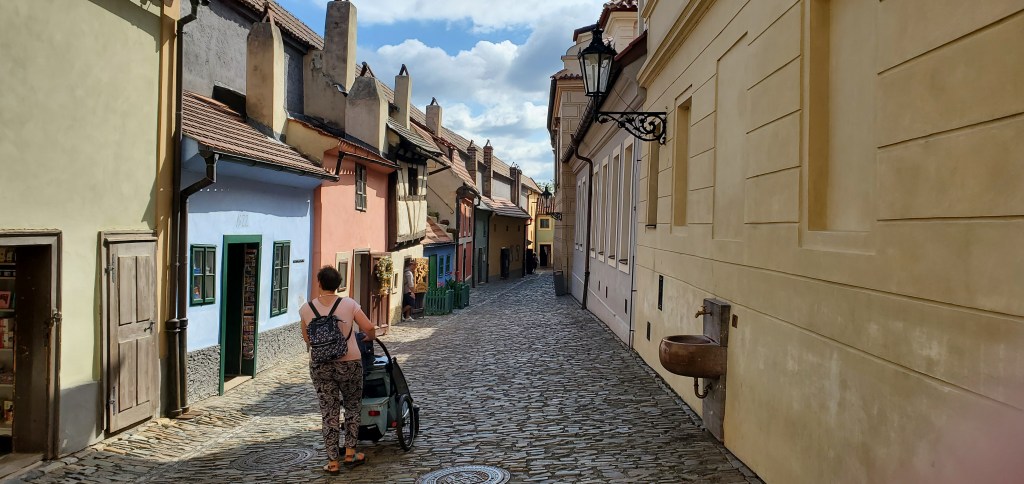
In my limited Czech, I understood “Zlatá ulička” to mean something like “Street of Gold.” Loosely translated, this phrase means “Golden Lane.” So when I looked at my ticket, I saw that I had purchased the right to passage through this part of history.
Up until the 1950, Golden Lane was home to the workers of Prague Castle. These tiny dwellings, no larger than a typical college dorm room, were home to the blacksmiths, the seamstresses, and goldsmiths who manufactured the metals, clothing and jewelry for the castle. It was the preponderance of goldsmiths that gave this street it’s moniker, “golden lane,” although today, it’s most famous historical resident is a writer: Franz Kafka, who lived there for a the summer of 1916. These two dozen small apartments (which shared one bathroom!) housed workers up until the 1950s, when Soviet authorities declared such living unsuitable for modern life and moved the few remaining residents to panel houses. There are some historical artifacts on display, but mostly souvenir shops with exorbitant prices. For example, I saw a bar of soap for sale at the price of 79 crowns (roughly four dollars). I thought to myself, I do need soap, but I can literally buy this exact same bar at a neighborhood shop for less than half the price.
After Golden Lane, I continued to walk downwards–down the slopes of the hill and downward into the depths of humanity. I saw a sign for “Dalibor Tower,” but it’s quite a misnomer, as this tower is a dungeon that housed the few political prisoners who dared to defy the kings of medieval Bohemia. With no numeral X in sight, I knew this wasn’t the tower I was looking for, and turned around. I still had to to find the entry for the palace and the bell tower.
I saw a small line at a building on the edge of the western edge of the main square, and saw a sign marked “Palace.” Well, it obviously wasn’t a massive bell tower, but it was another place I could visit with my purchased ticket, so I headed inside.
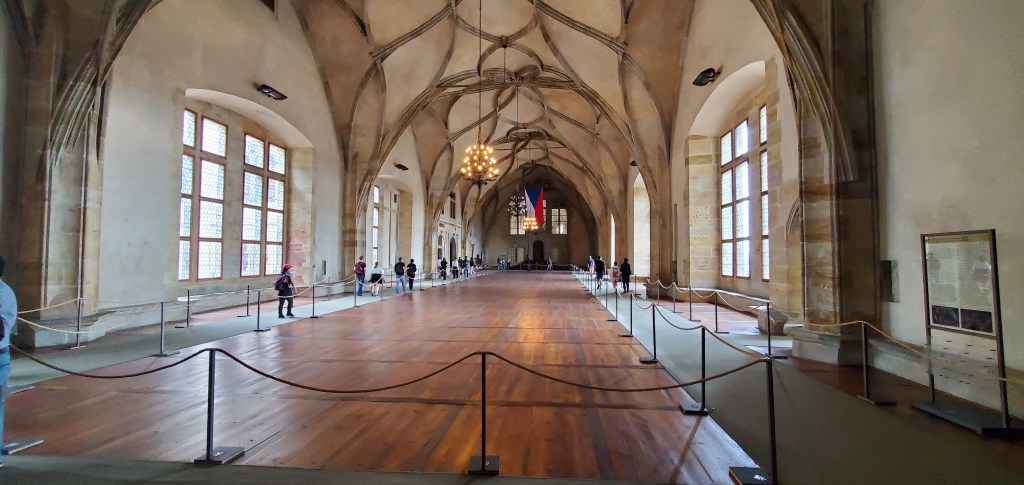
This ticket allows entry to the top floor of Old Royal Palace. Unlike the cathedral and the basilica, this building has been reserved for strictly secular state affairs. The third floor, named Vladislav Hall by King Vladislav II (clever name, eh?) is still used for official Czech state functions in the modern era. Just a few months after my visit, it is where Petr Pavel was sworn in as Czechia’s fourth president.
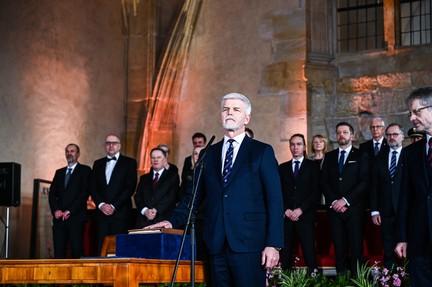
As I excited the palace, I seriously contemplated heading back to the ticket office to obtain my complementary map of the castle grounds. However, I thought about what Henry Jones, Sr. said to his son Indiana in The Last Crusade. “I find that when I take a look back, the situation reveals itself. So I walked to the southern edge of the main square, gazed up at the massive bell tower that stood before me, and sure enough, the situation revealed itself. At the foot of this massive structure is a small sign with a large x. I was so fixated with the top of the structure I hadn’t noticed the entrance at the bottom when I first walked right past it! I smiled at thought back to the last good Indiana Jones movie. X marks the spot!
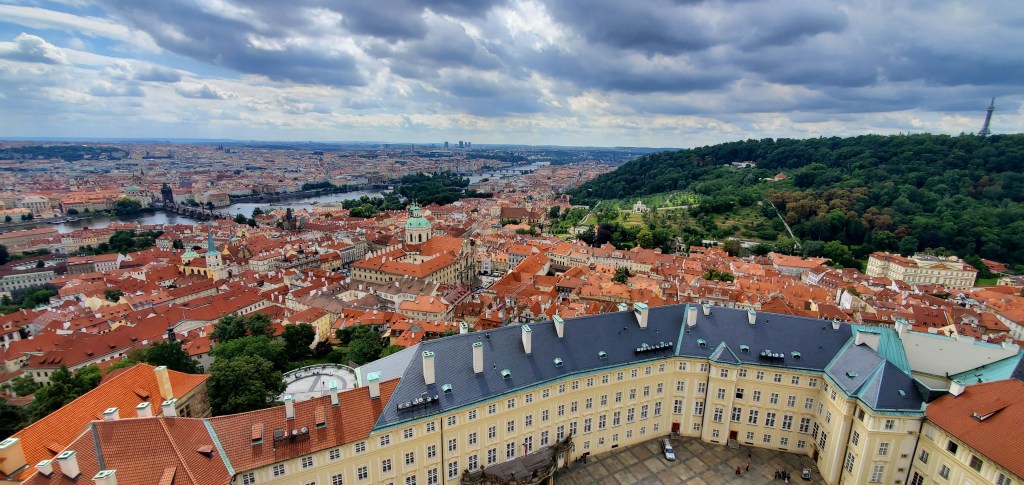
A birds eye view from the top of the Great South Tower. On the left is Charles Bridge. Just beyond the castle walls is Malá Straná. On the right, Petrin Tower.
Officially named the “Great South Tower,” the view from the top is as dizzying as it is breathtaking. I climbed 287 steps to reach a height of over 100 meters from the ground below. The fact that this building is already close the the crest of one of Prague’s largest hills makes the view all the more magnificent.
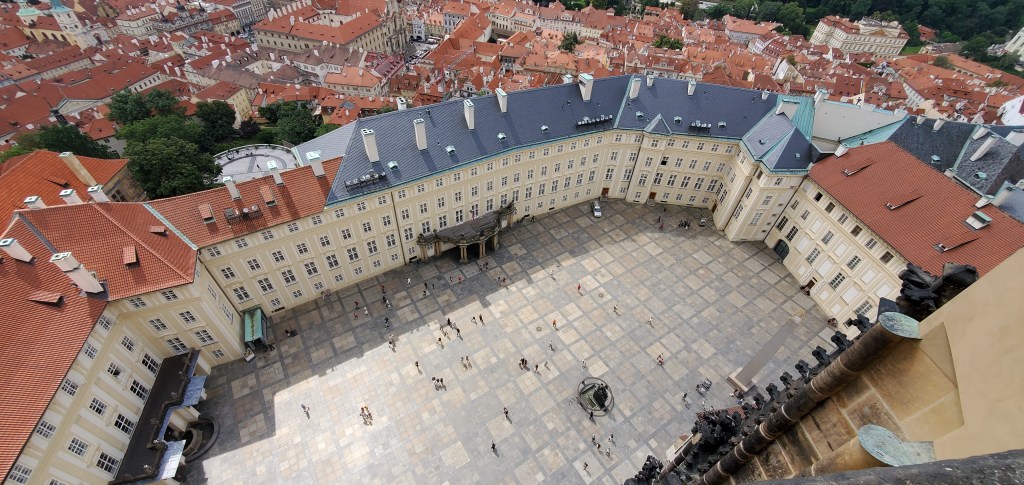
This trip was a success, map be damned. I had seen the world in a way that I had never seen it before–seen things and touched things that were (and still are) an integral part of Czech society. Who knows what exciting adventures await?
Tomorrow is a new day . . .
 A Connecticut Yankee in King Wenceslas's Court
Leave a comment