Dateline: July 7th, 2022
After my conversation with local Prague people yesterday, I decided that this morning I would investigate further into the insanity that was communist-occupied Czechoslovakia.
Located in Prague’s Republic Square, the museum of communism is a rather even handed approach to the socioeconimic ideology. The first exhibits are not dedicated to the 20th Soviet occupation but rather the the horrors of 19th century Austrian occupation that made communism such an appealing ideology in the first place.
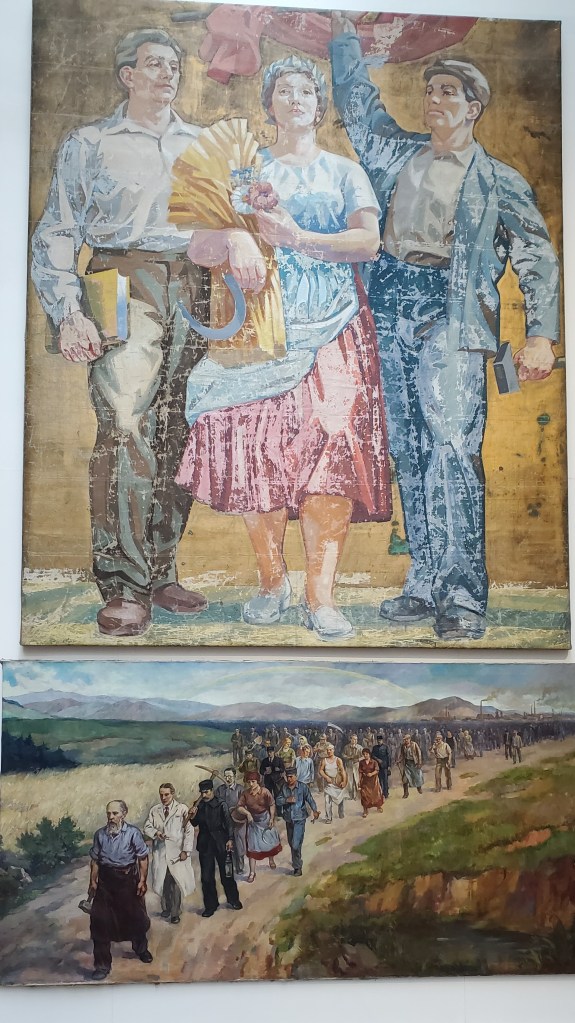
16 hour work days, six days a week. Workers work nearly all day every day, and yet wages are not able to afford any sort of decent lifestyle. It was from this hellscape that Marx and Engels theorized a different system in which workers have direct control over their labor, and thus, control the flow of goods and services.
Ironically, pre-communist Czechoslovakia did a better job of this than the Soviet Union. In the aftermath of World War I, Czechoslovakia declared it’s indepedence from Austria and implented a series of social reforms to raise the standard of living for the masses. In 1948, Czechoslovakians enjoyed the 12th longest average life expectancy in the world. Hey, that may not be in the top 10, but for a landlocked country that had just been ravaged by two world wars, that’s pretty darn good.
Then came the Iron Curtain. In an ideological war between the Communist East and the Capitalist West, Czechoslovakia’s mixed economic model simply was not allowed to exist. Josef Stalin nationalized virtually all businesses, and ordered all Czechoslovakian politicians to pledge their allegiance to Moscow first, last, and always.
This meant drafting workers into industries that often made little to no sense. For example, thousands of workers were recruited to construct a giant electric fence to surround the entirety of Czechoslovakia. Massive nuclear power plants were constructed to provide electricity for the massive fence. All to prevent people from leaving–something that was definitely not a problem before Josef Stalin transformed Czechoslovakia into a Soviet vassal state.
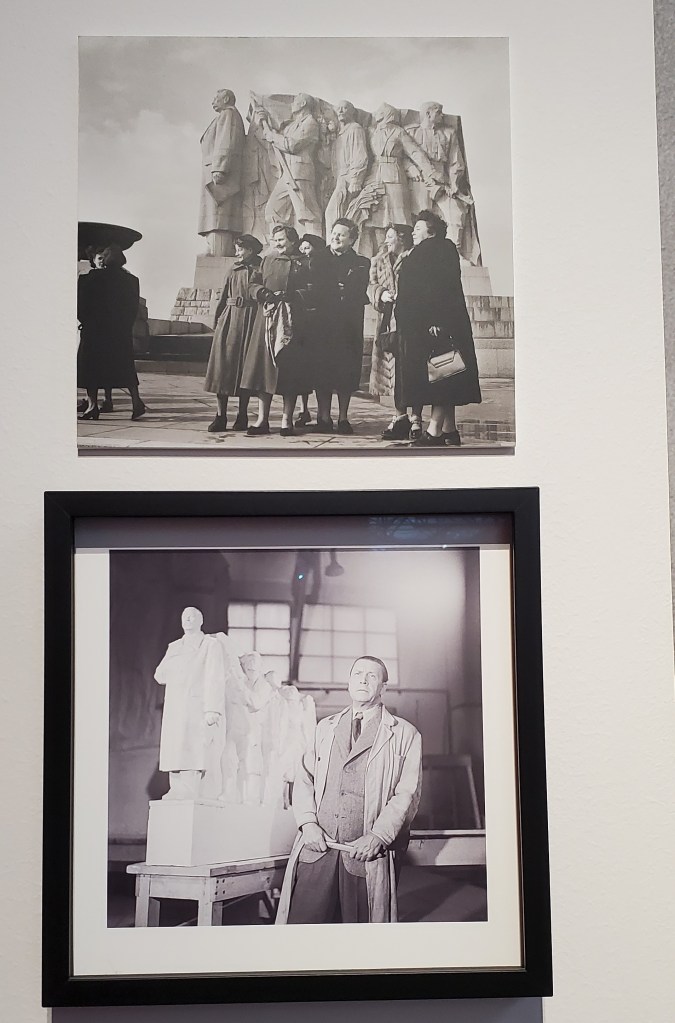
Speaking of Stalin, the Museum of Communism has a very comprehensive breakdown of the massive statue that the man erected to himself. Constructed in 1955 after five years of hard labor, the massive monument stood over 50 feet tall. The statue’s architect, Otakar Švec, was so horrified at his own creation that he committed suicide shortly before the statue’s public unveiling. The public of Prague didn’t care much for the statue either, and over the course of several days in 1963, it was obliterated. It took several days at nearly one ton’s worth of explosives to finally blow the statue into smithereens.
Speaking of 1963, the Museum of Communism dedicates and entire wall the American Civil Rights movement and hippie subculture of the 1960s. Apparently, Martin Luther King and Robert Kennedy were even more popular in Prague than they were in the United States, and the museum credits their idealism with the spontaneity of the Prague spring: A belief in a kinder, gentler socioeconomic system that valued the human face over bullets, bombs, and endless work quotas.
Sadly, this was not to be. While the deaths of King and Kennedy in 1968 were a sucker-punch to the American psyche, Czechoslovakia had to contend with a Soviet invasion. The military apprehended political reformer Alexander Dubček, and instituted martial law. The tanks rolled in, Dubček conceded that his movement was lost, and order was restored.
Walking through this exhibits, with a plethora of original artifacts, film footage, and well-written descriptions, simply gives one chills. One thing that stuck out was that the sheer brutality of the Cold War cut both ways. Artists who didn’t sufficiently support the Communist regime in the 1950s lost their jobs . . . just as American writers and actors who insufficiently opposed communism were blacklisted. The Soviet Union constructed row after row of identical (some would say ugly) panel block houses, while Robert Moses constructed what are perhaps the ugliest public housing developments the world has ever seen. The Soviet military wrecked havoc on the people of Prague in 1968, while the Los Angeles Police department wrecked havoc on the African-American community of Watts in 1969.
One could walk away from this exhibit feeling very cynical–and yet one does not. In 1948, George Orwell wrote that total capitulation to the super-state is the absolute worse thing a person can do. So what is the alternative? Well, at the final exhibit of the museum of Communism, the alternative is spelled out in big, bold letters:
Truth and Love Will Always Prevail Over Lies and Hate
Yes, spoiler alert: This story has a happy ending. Led by Vaclav Havel, this resistance movement centered not around guns or bombs, but simply stating facts and expressing genuine affection for the human race. The man opined, time and again, that we cannot remain silent in the face of evil or violence; silence merely encourages them.
The final exhibit is a collection of film footage of the public protests at Wenceslas Square in the final days of the Soviet occupation. Too make a long story short: People spoke out, and when they did, they defeated the Soviet military without dropping a single bomb, or firing a single bullet.
I left the museum feeling both humbled and inspired. Humbled in that I had learned so much more about what I previously did not know. Humbled in the appalling number of similarities between the political censorship of McCarthyist America with Stalinist Russia, and humbled by the fact that I have nearly succumbed to total cynicism so many times in my life
And I left inspired. Inspired by the resilience of an entire nation of people who had lived under Nazi Germany and the USSR. Inspired by the words of Vaclav Havel. Most of all, I just inspired by the fact that Martin Luther King and Robert Kennedy continue to inspire others all over the world.
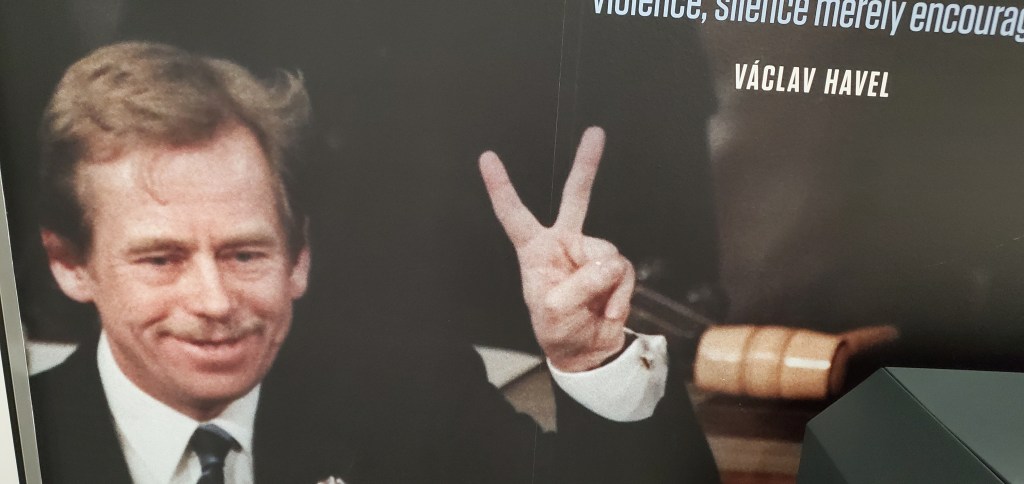
Martin Luther King said that the moral arc of the universe is long, but bends towards justice. I thoughts of these words, while the big bold words of President Havel remained emblazoned in my mind: Truth and Love will always prevail over Lies and Hate.
Tomorrow is a new day . . .
 A Connecticut Yankee in King Wenceslas's Court
Leave a comment